

Table of Contents
- What Is a Cable Assembly?
- What Goes Into a Cable Assembly
- Cable Assembly vs. Wire Harness: The Real Difference
- Types of Cable Assemblies
- Industry Applications
- How Cable Assemblies Are Made
- Testing and Quality Control
- Custom vs. Off-the-Shelf: When to Go Custom
- How to Choose a Cable Assembly Manufacturer
- Key Industry Standards
- FAQ
What Is a Cable Assembly?
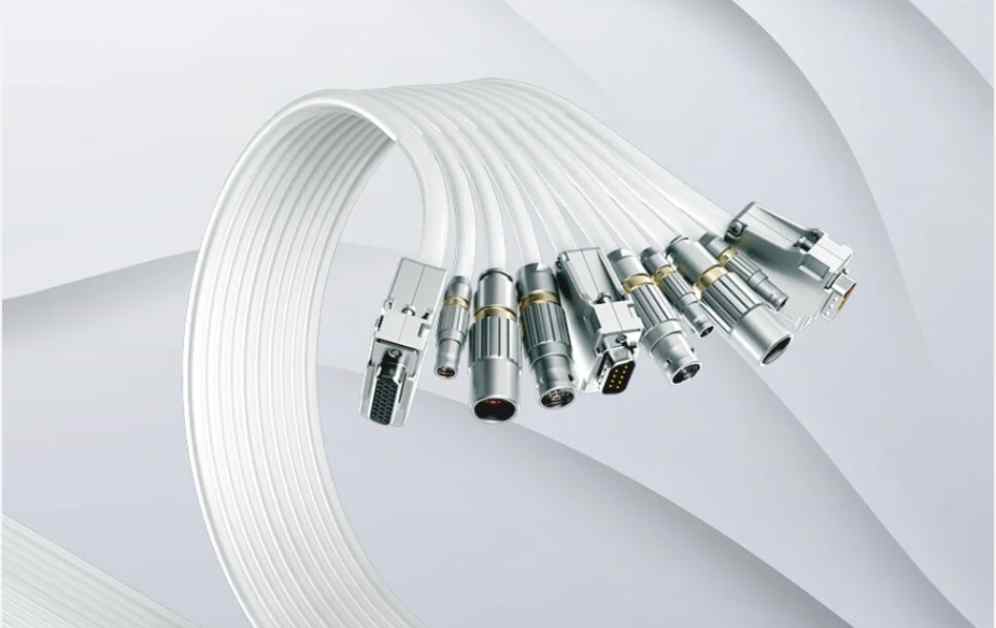
A cable assembly is a group of wires or cables bundled together inside a single protective outer jacket. The jacket — typically made of thermoplastics like PVC, polyurethane, or TPE — shields the internal conductors from moisture, abrasion, chemicals, and vibration. At one or both ends, connectors or terminals provide the interface to equipment.
Think of it as a self-contained transmission line. Power goes in one end, comes out the other. Signals pass through without picking up noise from the environment. The assembly handles the mechanical stress so the individual conductors inside don’t have to.
Cable assemblies serve three core functions in any electrical system:
- Organization — Instead of a rat’s nest of loose wires, you get one clean, labeled bundle that routes neatly through an enclosure or machine.
- Protection — The outer jacket and internal shielding guard against physical damage, EMI, moisture, and temperature extremes.
- Reliability — Factory-terminated connectors and tested assemblies eliminate the variables of field wiring. What leaves the factory works the same way at installation.
For applications that need fully integrated custom cable assemblies, the assembly is engineered as a complete system — cable, connector, jacket, and strain relief are specified together to meet the electrical and mechanical requirements of the end application.
What Goes Into a Cable Assembly
Every cable assembly, regardless of type, shares a common set of building blocks. Understanding these components helps you specify the right assembly for your application.
Conductors
The wires that carry current or signals. Copper is the default — it offers the best conductivity-to-cost ratio. Aluminum appears in some high-voltage power assemblies where weight matters more than conductivity. Conductor size ranges from 30 AWG (signal-level, fractions of an amp) to 4/0 AWG (hundreds of amps). Stranded conductors provide flexibility; solid conductors offer lower resistance and are easier to terminate in IDC connectors.
Insulation
Each individual conductor gets its own insulation layer. Material choice depends on the operating environment:
- PVC — Low cost, good flexibility, rated to 105°C. Standard for general-purpose indoor assemblies.
- XLPE (Cross-linked Polyethylene) — Higher temperature rating (125°C+), better chemical resistance. Common in power and industrial assemblies.
- PTFE (Teflon) — 200°C+ rating, excellent chemical resistance. Used in aerospace and military assemblies where failure is not an option.
- Silicone — Extremely flexible, 200°C rating. Medical and high-flex applications.
Shielding
Foil or braided metal wraps around individual conductors or the entire bundle to block electromagnetic interference (EMI). Foil provides 100% coverage but is fragile. Braid provides 70-95% coverage and handles flexing better. High-noise environments — factory floors with VFDs, aircraft with radar — demand shielded assemblies. Clean lab environments may not.
Outer Jacket
The outermost layer. It takes the abuse so the conductors don’t have to. Jacket material selection is driven by the installation environment:
- PVC — Indoor, general purpose
- Polyurethane (PUR) — Abrasion-resistant, oil-resistant, outdoor-rated
- TPE — Flexible at low temperatures, halogen-free (important for confined spaces)
- LSZH (Low Smoke Zero Halogen) — Required in mass transit, marine, and enclosed public spaces
Connectors and Terminations
The interface between the assembly and the equipment. Connectors range from simple ring terminals to multi-pin circular connectors with IP69K sealing. The connector choice determines mating reliability, environmental sealing, and how many connect/disconnect cycles the assembly can handle.
Strain Relief
The transition point where the cable enters the connector body is the highest-stress zone in any assembly. Strain relief — whether a molded boot, a cable gland, or a flexible overmold — distributes bending forces away from the termination point. Without proper strain relief, the conductors will fatigue and break at the connector entry.
Cable Ties and Sleeving
Internal organization tools. Expandable braided sleeving bundles multiple conductors into a single manageable unit. Heat-shrink tubing provides additional insulation at splice points. Cable ties keep routing neat inside enclosures.
Cable Assembly vs. Wire Harness: The Real Difference
These terms get swapped constantly, but they describe two different products. The distinction matters because they’re suited to different environments and cost structures.
| Feature | Cable Assembly | Wire Harness |
|---|---|---|
| Outer Protection | Full jacket encases all conductors | Individual wires exposed; bundled loosely |
| Environmental Rating | Resistant to moisture, abrasion, chemicals | Indoor only; no environmental sealing |
| Appearance | Looks like a single thick cable | Multiple branches, visible individual wires |
| Durability | High — built for outdoor and harsh conditions | Moderate — for protected indoor environments |
| Flexibility | More rigid due to jacket | More flexible; wires can be separated |
| Typical Cost | Higher (more materials, more process steps) | Lower (simpler construction) |
| Best For | Outdoor, industrial, aerospace, medical | Internal device wiring, automotive dashboards, appliances |
The simplest way to remember: a cable assembly is sealed for the environment. A wire harness is organized for the assembly line. If your application lives outdoors, near chemicals, or anywhere moisture exists, you need a cable assembly. If it’s inside a protected enclosure, a custom wire harness may be the more cost-effective choice.
Types of Cable Assemblies
Cable assemblies come in distinct categories based on construction, connector type, and intended signal. Here are the most common types you’ll encounter.
Coaxial Cable Assemblies
Construction: Central copper conductor (18-30 AWG), dielectric core, braided shielding (up to 95% coverage), protective outer jacket.
Connectors: BNC, SMA, N-type, TNC, F-type.
Performance: 50 Ω or 75 Ω impedance. Signal transmission in the GHz range.
Used for: RF and microwave systems, broadcast equipment, WiFi access points, satellite communications, CCTV.
Coaxial assemblies are built to carry high-frequency signals with minimal loss. The concentric construction — signal on the center conductor, ground on the shield — creates a controlled-impedance transmission line that rejects external interference. For production-grade coaxial cable assemblies, connector termination quality directly determines the assembly’s VSWR and insertion loss.
Molded Cable Assemblies
Construction: Wires, connectors, and strain relief fused into a single sealed unit using injection-molded PVC or TPE.
Sealing: IP67 or higher when properly molded.
Mechanical strength: Overmold resists approximately 50 lbs of axial pull force.
Used for: Field sensors, automotive under-hood wiring, outdoor equipment, medical devices requiring sterilization.
The overmold process permanently bonds the connector body, cable jacket, and strain relief into one piece. No seams, no gaps, no entry points for moisture. Molded assemblies cost more up front but eliminate the most common failure point in field installations: the connector-to-cable junction.
Ribbon Cable Assemblies
Construction: Up to 64 parallel conductors (typically 28-30 AWG) bonded in a flat profile.
Termination: IDC (Insulation Displacement Connector) with 0.05-inch pitch headers.
Used for: Internal computer connections, disk drives, backplanes, board-to-board interconnects.
Ribbon assemblies excel where space is tight and conductor count is high. The flat profile routes cleanly through enclosures. IDC termination allows mass termination — all conductors connected simultaneously — which cuts assembly time and cost compared to individual crimping.
USB Cable Assemblies
Construction: Twisted data pairs (28 AWG), power conductors (20 AWG), foil/braid shielding, molded USB-A, USB-C, or Micro-B connectors.
Standards: USB-IF certified. Resistance <0.25 Ω. Current up to 3A (USB-C PD up to 5A).
Used for: Data transfer, device charging, peripheral connections, consumer electronics.
Circular Connector Cable Assemblies
Construction: M8, M12, or MIL-DTL-38999 circular connectors with jacketed multi-conductor cable.
Sealing: IP65 to IP69K depending on connector series.
Used for: Industrial automation, motion control, robotics, food and beverage processing (washdown environments).
Circular connectors provide the most robust mechanical connection of any assembly type. The threaded or bayonet coupling resists vibration and accidental disconnection. IP69K-rated versions survive high-pressure, high-temperature washdown — standard in food processing plants.
Power Cable Assemblies
Construction: 12 AWG to 4/0 AWG conductors with XLPE, EPDM, or rubber insulation.
Ratings: 600V to 35kV. Compliant with UL 62, UL 83, or IEC 60502.
Terminations: Ring lugs, compression lugs, pin terminals, molded plugs.
Used for: Power distribution, generators, motor connections, renewable energy systems.
RF/EMI Shielded Cable Assemblies
Construction: Multi-layer shielding — combination of foil and braid — with precision-terminated connectors.
Performance: Shielding effectiveness of 60-90 dB depending on construction.
Used for: Medical imaging, military communications, aerospace avionics, test and measurement.
LED Cable Assemblies
Construction: 20-22 AWG conductors in PVC jackets, terminated with plug-lock or screw terminals.
Ratings: Class 2 power, constant voltage up to 60V.
Used for: Signage, architectural lighting, automotive lighting, display backlighting.
Flat/Flexible Cable Assemblies (FFC/FPC)
Construction: Copper strips etched onto PET film, laminated in flat profile.
Performance: Bend radius down to 5 mm. Rated for 10+ million flex cycles.
Used for: Robotic arms, laptop hinges, printer heads, display connections.
Industry Applications
| Industry | Common Assembly Types | Key Requirements |
|---|---|---|
| Automotive | Molded, power, circular | Vibration resistance, heat tolerance, ISO 19642 |
| Industrial Automation | Circular, shielded, power | IP67+, oil resistance, UL 508A compliance |
| Medical | USB, ribbon, custom | IEC 60601, sterilization compatibility, high flex life |
| Telecommunications | Coaxial, fiber optic | Low insertion loss, impedance control, weatherproofing |
| Aerospace & Defense | Circular, shielded, molded | MIL-DTL-38999, FAR 25.853 flammability, extreme temperature range |
| Renewable Energy | Power, custom | UV resistance, high voltage, 25-year service life |
| Robotics | Flat/flex, circular | 10M+ flex cycles, IP68 sealing, compact routing |
| Agricultural | Molded, power | Chemical resistance, weatherproof, wide temperature range |
For manufacturers building automotive wiring harnesses and assemblies, the production environment must meet IATF 16949 quality management standards — a non-negotiable requirement for Tier 1 and Tier 2 automotive suppliers.
How Cable Assemblies Are Made
The manufacturing process follows a structured sequence. Skipping or rushing any step produces assemblies that pass visual inspection but fail in the field.
1. Design and Specification
Every assembly starts with a specification: cable type, conductor gauge, insulation material, shielding requirements, connector types, overall length, and environmental rating. For custom assemblies, the manufacturer reviews the customer’s drawings and identifies any conflicts — a connector that doesn’t fit the specified cable diameter, for example — before cutting any wire.
2. Material Sourcing
Conductors, insulation, connectors, and jacketing materials are sourced against the specification. Traceability matters in regulated industries: aerospace and medical assemblies require full material lot traceability from raw stock to finished product.
3. Cutting and Stripping
Automated cutting machines measure and cut cables to specified lengths with tolerances as tight as ±1 mm. Laser wire strippers remove insulation without nicking the conductor — a critical step because a nicked conductor creates a stress concentration point that will fail under flexing.
4. Crimping and Soldering
Connectors attach to conductors via crimping or soldering. Crimping is faster, more consistent, and preferred in high-volume production. A properly crimped connection creates a cold weld between the conductor and terminal — gas-tight, corrosion-resistant, and mechanically stronger than solder. Soldering is used where crimp tooling isn’t available for the specific terminal or where the design calls for it.
For either method, the operator verifies pull force on a sample basis. A crimp that pulls apart at 2 lbs when it’s rated for 15 lbs is a process problem, not a material problem.
5. Assembly and Bundling
Conductors are routed, bundled with ties or sleeving, and dressed into the outer jacket. For molded assemblies, this is when the cable sub-assembly is loaded into the injection mold.
6. Overmolding (for Molded Assemblies)
The cable sub-assembly is placed in a mold cavity. Hot thermoplastic (PVC or TPE) is injected under pressure, flowing around the connector body and cable junction. The material cools and solidifies into a single seamless unit. Overmolding provides strain relief, environmental sealing, and mechanical reinforcement in one step.
7. Testing
Every assembly goes through electrical testing before it leaves the factory. The specific tests depend on the assembly type and application — see the next section for details.
8. Labeling and Packaging
Assemblies are labeled with part numbers, date codes, and serial numbers (for traceable builds). Packaging protects the connectors and prevents kinking during shipping.
Testing and Quality Control
Testing separates a cable assembly from a bundle of wires with connectors. The specific test regimen depends on the application, but these are the core tests:
Continuity Test
Verifies that each conductor has an unbroken electrical path from end to end, and that no shorts exist between adjacent conductors. This is the minimum test for every assembly. A simple continuity tester checks point-to-point; a automated test system checks every pin combination in seconds.
Hipot (High Potential) Test
Applies high voltage — typically 2× rated voltage + 1000V — between conductors and between each conductor and the shield. The test verifies that the insulation can withstand voltage stress without breakdown. A hipot failure means the insulation is compromised somewhere in the assembly.
Insulation Resistance (IR) Test
Measures the resistance of the insulation between conductors. Values are typically in the megaohm to gigaohm range. Low IR indicates moisture ingress, contamination, or degraded insulation.
Pull Test
Measures the mechanical force required to separate a crimped or soldered terminal from its conductor. Minimum pull force values are specified by terminal manufacturer and wire gauge. This test catches improper crimp settings before assemblies ship.
Flex/Bend Test
For assemblies that will see repeated movement — robotic arms, medical device cables, laptop hinges — flex testing simulates the expected lifetime of bending cycles. The assembly is mounted on a flex tester and bent through a specified radius at a specified rate until failure or until it exceeds the rated cycle count.
Environmental Test
Assemblies destined for harsh environments go through thermal cycling, humidity exposure, salt spray (corrosion resistance), and chemical exposure tests. These are typically done on a sample basis for qualification rather than on every production unit.
For industries like medical and aerospace, custom cable assemblies must pass application-specific validation testing beyond standard production tests — including biocompatibility for medical devices and flammability for aircraft interiors.
Custom vs. Off-the-Shelf: When to Go Custom
Off-the-shelf cable assemblies work when your requirements match what’s already in production: standard lengths, standard connectors, standard jacket materials. They’re cheaper, faster to source, and available from multiple distributors.
Custom assemblies become the right choice when:
- Your length isn’t standard. Adding extension cables and adapters to make a standard assembly fit creates multiple failure points. A custom assembly at the exact length eliminates those extra connections.
- Your environment is unusual. Standard PVC jackets don’t survive in chemical plants. Standard connectors don’t seal against high-pressure washdown. Custom material selection solves these problems at the design stage.
- You need mixed signal types in one assembly. Power, data, and RF in a single jacket with a single connector at each end. Off-the-shelf assemblies don’t do this.
- Your volume justifies the tooling. Custom connector molds and test fixtures have upfront costs. At 100 units, off-the-shelf wins. At 10,000 units, custom wins on per-unit cost and reliability.
- You need traceability. Medical and aerospace assemblies require lot-level material traceability that off-the-shelf products don’t provide.
Working with a manufacturer that provides custom cable assembly services means the assembly is designed to your specification, tested to your requirements, and delivered ready to install — no field termination, no adapters, no compromises.
How to Choose a Cable Assembly Manufacturer
Related OUKETECH resources: OEM cable manufacturer.
Not all cable assembly manufacturers are built the same. Here’s what to evaluate:
Certifications
ISO 9001 is the baseline for quality management. For automotive, look for IATF 16949. For medical, ISO 13485. For aerospace, AS9100. If the manufacturer doesn’t have the certification your industry requires, keep looking.
Industry Experience
A manufacturer that’s been building industrial automation assemblies for 15 years understands oil-resistant jackets, IP ratings, and UL 508A panel requirements. A manufacturer that’s new to your industry will learn on your dime. Ask for references in your specific vertical.
In-House Capabilities
The more processes a manufacturer does in-house — cutting, stripping, crimping, soldering, overmolding, testing — the fewer handoffs in the supply chain and the faster the turnaround. Ask whether tooling is in-house or outsourced. In-house tooling means faster design changes and lower mold costs.
Testing Equipment
A manufacturer should have automated continuity/hipot testers, pull testers, and environmental chambers if your application requires it. Ask to see their test reports — not just a pass/fail certificate, but the actual measured values.
Minimum Order Quantity (MOQ)
Some manufacturers won’t touch orders below 1,000 units. Others specialize in low-to-medium volume with no MOQ. For prototyping and pilot runs, find a manufacturer that handles small batches without punishing pricing.
Engineering Support
The best manufacturers catch design problems before production starts. If your drawing shows a connector that doesn’t fit the specified cable diameter, a good engineering team flags it during design review — not after 500 assemblies are built.
Key Industry Standards
| Standard | Scope | Relevant For |
|---|---|---|
| IPC/WHMA-A-620 | Requirements and acceptance for cable and wire harness assemblies | All industries — the universal assembly standard |
| UL 62 | Flexible cord and fixture wire | Power cable assemblies |
| UL 83 | Thermoplastic-insulated wires and cables | General-purpose wiring |
| UL 508A | Industrial control panels | Industrial automation assemblies |
| IEC 60601 | Medical electrical equipment safety | Medical device assemblies |
| ISO 19642 | Road vehicle cables | Automotive assemblies |
| FAR 25.853 | Aircraft interior flammability | Aerospace assemblies |
| IATF 16949 | Automotive quality management | Automotive supply chain |
| ISO 13485 | Medical device quality management | Medical device assemblies |
| IP67/IP68/IP69K | Ingress protection ratings | Outdoor, washdown, submersible assemblies |
FAQ
What’s the difference between a cable and a cable assembly?
A cable is the raw transmission medium — conductors, insulation, and jacket. A cable assembly is a finished product: cable plus connectors, terminations, strain relief, and testing. You buy cable by the foot. You buy a cable assembly as a complete, ready-to-install unit.
Can a cable assembly be repaired in the field?
Depends on the assembly type. Molded assemblies generally cannot be field-repaired — the overmold is permanent. Assemblies with serviceable connectors (circular, some RF types) can have connectors replaced if the cable itself is undamaged. In practice, for critical applications, replacing the entire assembly is usually cheaper than troubleshooting an intermittent field repair.
How long do cable assemblies last?
Service life depends on the environment and duty cycle. A properly specified indoor assembly in a clean environment can last 20+ years. An assembly on a robotic arm flexing 1 million cycles per year may need replacement every 2-3 years. The jacket material, bend radius, and strain relief design determine flex life.
What’s the most common cause of cable assembly failure?
Strain relief failure at the connector-to-cable junction. The conductors fatigue and break at the point where they exit the connector body. This is almost always a mechanical problem — insufficient strain relief, bend radius too tight, or the wrong jacket material for the flex environment — not an electrical one.
When should I use shielded vs. unshielded cable assemblies?
Use shielded assemblies when the cable runs near motors, VFDs, power lines, radio transmitters, or other EMI sources. Use unshielded assemblies in electrically quiet environments where the cost savings matter. When in doubt, shield — adding shielding after installation is far more expensive than including it in the original assembly.
What does IP68 mean on a cable assembly?
IP68 means the assembly is dust-tight (6) and protected against continuous immersion in water (8). The specific depth and duration are defined by the manufacturer — there’s no universal depth for IP68. For applications requiring high-pressure washdown, look for IP69K instead, which specifically tests against 80°C water at 80-100 bar pressure.
Conclusion
A cable assembly is more than wires in a jacket. It’s an engineered component that carries power and signals through whatever environment you put it in — factory floor, operating room, aircraft wing, or solar farm. The right assembly, properly specified and tested, runs for years without attention. The wrong one fails in weeks.
The key decisions come down to four things: conductor and insulation materials matched to your electrical requirements, jacket material matched to your environment, connectors matched to your equipment, and a manufacturer with the certifications and testing capability your industry demands.
For applications that need custom cable assemblies built to your exact specifications — with full testing, traceability, and industry certifications — working with an experienced manufacturer eliminates the compromises of off-the-shelf products and ensures the assembly fits your system from day one.