

Custom RF & Coaxial Cable Assembly Manufacturer
OUKETECH manufactures custom RF and coaxial cable assemblies for OEM equipment from customer drawings, BOMs, samples and electrical requirements. We support cable-and-connector review, prototype approval, low-volume builds and repeat production with project-specific inspection and test plans.
Custom RF Cable Assemblies Built to Your Drawings and RF Requirements
As a custom RF cable assembly manufacturer and custom coaxial cable assembly manufacturer, OUKETECH supports OEM engineers and procurement teams that need more than an off-the-shelf jumper. We review the specified cable, connector interfaces, impedance, operating frequency, insertion-loss or return-loss targets, finished length, routing, environment, labeling and production quantity before quotation.
Projects can begin with a released drawing, BOM, connector part numbers, pinout, approved sample or a partially defined requirement. Any material alternative, RF test method, workmanship requirement or acceptance limit is documented for customer approval before production.
OUKETECH provides OEM RF cable assembly manufacturing, build-to-print production and project-specific sourcing support for prototypes, pilot lots and repeat orders. Buyers comparing an RF coaxial cable assembly manufacturer, coaxial cable assembly supplier or contract manufacturer can send the same technical package for a transparent review of assumptions, exclusions, tooling, test evidence, MOQ and lead time.
For a custom RF cable assembly quote, include prototype quantity, annual volume, target dates and ship-to location together with the electrical and mechanical requirements.
Why OEM Buyers Choose OUKETECH for RF & Coaxial Cable Assemblies
A capable RF cable assembly supplier should connect the drawing, materials, termination process, RF performance, inspection records and commercial plan. OUKETECH organizes these inputs into one project-specific manufacturing package instead of treating the cable and connector as independent catalog items.
Engineering and DFM Review
Engineering review covers cable-to-connector compatibility, impedance, frequency band, bend radius, bulkhead or right-angle geometry, strain relief, routing, phase or delay needs and the proposed inspection method. Open technical questions are returned before a prototype or production lot is released.
Build-to-Print Manufacturing
Build-to-print RF and coaxial cable assemblies are manufactured from the customer-approved drawing, BOM, revision and test plan. Component substitutions, construction changes and revised acceptance criteria require documented approval before they are introduced into an approved part number.
Prototype to Repeat Production
OUKETECH can review prototype, low-volume and high-volume coaxial cable assembly requirements. MOQ, material pack size, tooling, sample timing and production lead time depend on the exact cable, connector, process, test scope and order quantity, so commercial terms are confirmed in the quotation.
Project-Specific Scheduling
Project schedules separate material procurement, tooling or fixture preparation, prototype build, customer approval, production and transit. Buyers should provide a target sample date and target production date; OUKETECH will return a project-specific schedule rather than a universal lead-time promise.
Documented Change Control
Revision-controlled manufacturing helps second-source and repeat-order programs maintain the approved cable, connector, dimensions, labeling, packaging and test requirements. When a component becomes unavailable, proposed alternatives are reviewed for electrical, mechanical and environmental fit before customer approval.
RF & Coaxial Cable Assembly Manufacturing Capabilities
The configuration must be defined by the equipment interface and signal requirements. OUKETECH reviews 50-ohm and 75-ohm coaxial assemblies, flexible and semi-rigid constructions, miniature RF interconnects, low-loss cable options and application-specific mechanical protection against the submitted part-level requirements.
50-ohm RF cable assemblies are commonly specified for antennas, wireless equipment, test systems and radio-frequency modules, while 75-ohm coaxial cable assemblies are common in broadcast, video and selected instrumentation applications. The quote should identify the nominal impedance, operating frequency range, connector part numbers and permitted insertion loss, return loss or VSWR across the stated band.
Do not select a connector by family name alone. SMA, BNC, TNC, N-Type, MCX, MMCX and other interfaces can differ by impedance, gender, polarity, mounting style, cable group and performance rating.
For a low-loss RF cable assembly, specify the exact cable manufacturer and part number or the required electrical and mechanical limits. Requests may reference an LMR400 cable assembly, another LMR-type construction or a project-approved equivalent, but form, fit, loss, bend radius, jacket and connector compatibility must be reviewed before an alternative is quoted.
Attenuation depends on cable construction, length, frequency, temperature, handling and connector transitions. Any published limit therefore belongs on the released drawing or test plan for the finished assembly.
Miniature and micro-coax projects may use RG174, RG178, RG316 or other small-diameter cables with U.FL, I-PEX, MHF, MCX or MMCX interfaces. A miniature coaxial cable assembly manufacturer must review connector-to-cable compatibility, mating cycles, pull direction, routing space, retention and assembly handling instead of relying only on the connector family name.
Semi-rigid RF cable assemblies can support controlled routing and shielding where the formed geometry is defined. Flexible RF and microwave cable assemblies are suited to service loops, equipment routing and applications that require movement, but bend radius, flex life and phase stability are project-specific. Phase-matched RF cable assemblies require a defined frequency band, reference plane, matching method, tolerance and report format.
Rugged RF coaxial assemblies may require abrasion protection, sealing, overmolded strain relief, high-temperature materials, vibration control or armored construction. The operating environment, installation method, mating duty and qualification plan should be stated so the proposed construction can be reviewed against the actual risk.
Cable, Connector and Mechanical Configuration Options
Use the options below to prepare a quote-ready RF cable assembly specification. Every option remains subject to cable-to-connector compatibility, material availability, process review and customer approval.
Conductor and Cable Construction
Define the cable manufacturer, complete part number, nominal impedance, conductor and dielectric construction, outer diameter and any approved alternative. For controlled products, include material traceability and change-notification requirements.
RF and Coaxial Cable Types
Common RFQ references include RG58, RG174, RG178, RG316, RG213, RG59 and low-loss cable families. A request for an RG316 cable assembly manufacturer, RG174 coaxial cable assembly, RG178 RF cable assembly or RG58 coaxial cable assembly should also identify connector part numbers, length, environment and RF acceptance limits.
Impedance and RF Performance Inputs
State 50 ohms, 75 ohms or another project-specific impedance, plus the operating band and allowable insertion loss, return loss or VSWR. If phase, delay, shielding effectiveness, power or PIM matters, define the limit, method, sampling and required report.
Shielding and Grounding
Specify braid, foil, double-shield, grounding and termination requirements from the system EMI risk. Shield coverage alone does not define installed performance; connector transition, backshell, ground path, cable preparation and enclosure bonding also affect the result.
Jacket and Environmental Materials
Choose PVC, PE, FEP, PTFE, TPE, polyurethane, LSZH or another approved material based on temperature, chemicals, abrasion, UV, flame, flexibility, cleaning and regulatory requirements. Material compliance must be tied to the exact cable and project documentation.
RF Connector Options
Connector requests may include SMA, BNC, TNC, N-Type, MCX, MMCX, U.FL, I-PEX, MHF, SMB, SMC, SMP, FAKRA or project-specified interfaces. Include manufacturer part number, gender, polarity, impedance, orientation, bulkhead hardware, panel thickness and mating interface. Straight, right-angle and bulkhead configurations are reviewed against routing and torque requirements.
Custom Length, Clocking and Routing
State finished length and tolerance, connector clocking, formed geometry, branch or breakout dimensions, minimum bend radius and installation access. Custom-length RF cable assemblies should be measured from defined reference points on the released drawing.
Labeling, Packaging and Documentation
Define labels, serialization, heat shrink, protective sleeve, caps, bagging, kits, inspection records, certificate requirements and shipment-lot traceability. Documentation, retention period and electronic file format should be included in the RFQ.
RF Cable Assemblies for Telecom, Industrial, Medical and Automotive Equipment
Application names provide context, but they do not replace the drawing. Each industry section below identifies typical inputs that an RF engineer, OEM buyer or sourcing manager should define before requesting a quotation.
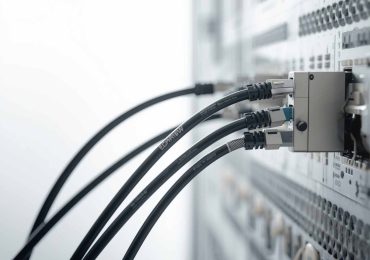
Telecommunications
RF cable assemblies for telecom equipment, 5G infrastructure, antennas, radio cabinets and distributed communication systems may require low-loss cable, outdoor protection, bulkhead interfaces and controlled RF test evidence. Provide the frequency band, route length, connector interfaces, power, environment and installation method.
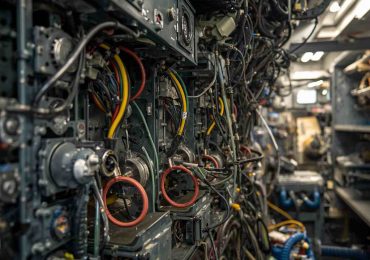
Aerospace and defense RF cable projects may involve semi-rigid routing, phase matching, vibration, temperature, weight, traceability and customer-controlled materials or standards. Qualification, export, source-control and documentation requirements must be confirmed for the specific program before capability is represented.
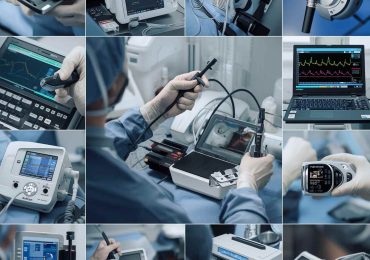
RF cable assemblies for medical devices require the device manufacturer to define signal, flex, cleaning, material, traceability and regulatory responsibilities. OUKETECH reviews the submitted equipment-level specification; medical-use suitability is not inferred from a generic cable description.

RF coaxial cables for industrial equipment, machine vision, robotics and industrial IoT may face vibration, repeated movement, oil, abrasion, EMI and restricted routing. Define the duty cycle, bend radius, enclosure interface, temperature and service conditions.
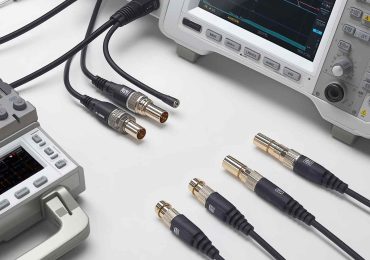
Test and Measurement
RF cable assemblies for test and measurement equipment may require stable handling, defined reference planes, repeatable mating, low loss, phase matching or serialized reports. State the full measurement band, adapters, calibration expectations, sampling and acceptance limits.
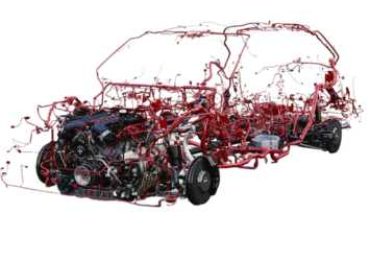
An automotive RF cable assembly manufacturer must work from approved connector, cable, routing, retention, environmental and quality requirements. FAKRA or other automotive interfaces should be quoted by exact part number and program documentation, not by connector family alone.

Railway & Transportation
Rail and transportation assemblies may require vibration, temperature, smoke, flame, EMC, serviceability and documentation controls. The applicable standard, test method and acceptance criteria are project-specific and must be supplied or agreed before quotation.

Energy & Power Industry
Energy and power equipment may expose signal interconnects to EMI, outdoor duty, temperature, chemicals or long service intervals. Specify the installed environment, shielding and grounding approach, routing and maintenance requirements.
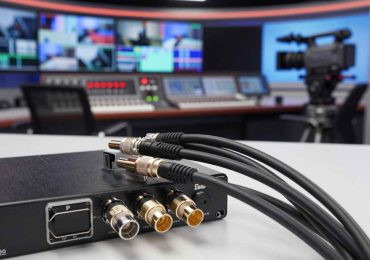
Broadcast & Media Production
Broadcast and media systems commonly use 75-ohm coaxial paths with BNC or other specified interfaces. Cable impedance, connector impedance, length, bandwidth, installation handling and test evidence should remain consistent across the finished assembly.
Build-to-Print RF Cable Assembly Process: RFQ to Production
A controlled process turns the customer specification into a repeatable build package. The sequence below separates engineering approval, manufacturing and evidence so buyers can compare RF cable assembly suppliers on the same basis.
1. RFQ and requirements review
Submit the drawing, BOM, cable and connector part numbers, impedance, frequency band, electrical limits, mechanical duty, environment, prototype quantity, annual volume and target dates. OUKETECH records assumptions, exclusions and questions before quotation.
2. Cable-and-connector compatibility review
Engineering checks cable group, preparation dimensions, termination method, connector orientation, mounting hardware, length reference, bend radius, strain relief and test access. Proposed substitutions require customer approval.
3. Prototype and first-article approval
The sample plan identifies quantity, drawing revision, workmanship criteria, dimensional checks, fit review, electrical tests, report content and approval responsibility. A prototype should not be treated as an approved production change without documented release.
4. Process planning and manufacturing
Work instructions control cutting, stripping, forming, soldering or crimping, connector assembly, torque, cleaning, marking, inspection and packaging as applicable. Fixtures and operator requirements are defined for the approved construction.
5. Inspection and RF test execution
Continuity, visual and dimensional checks may be combined with insertion loss, return loss, VSWR, phase, delay, PIM or environmental tests when specified. The quotation must confirm which tests are in-house, outsourced or unavailable, together with sampling, calibration and report format.
6. Production release and change control
Repeat orders use the approved drawing, BOM, process and test plan. Component end-of-life events, proposed alternatives and engineering changes are communicated before implementation. Shipment records and traceability are supplied according to the agreed project requirements.
RF Cable Assembly Inspection, Testing and Documentation
Testing must be tied to the product risk and drawing limits. A continuity result does not prove RF performance, and a generic claim such as VNA tested is incomplete without frequency band, reference plane, calibration, fixtures, acceptance limit, sampling and report requirements.
Continuity and Workmanship Inspection
Visual and dimensional inspection can address cable preparation, conductor and dielectric condition, solder or crimp workmanship, connector seating, hardware, torque witness, length, clocking, labels and packaging. Continuity, open and short checks are defined by the approved test plan.
Insertion Loss, Return Loss and VSWR
Insertion loss, return loss and VSWR are frequency-dependent RF measurements. If a VNA-tested RF cable assembly or serialized RF cable assembly test report is required, state the operating band, limits, reference planes, adapters, calibration method, sampling and data format. OUKETECH must confirm the applicable equipment and execution method in the quotation.
Phase Matching, PIM and Environmental Testing
Phase matching, delay, PIM, power, shielding or environmental testing should be specified only when required by the system. A low-PIM cable assembly, phase-matched set or environmental qualification requires customer-defined limits and a confirmed test method; capability and test location remain project-specific until quoted.
RF & Coaxial Cable Assembly Manufacturer for OEM Projects
For buyers sourcing an RF cable assembly manufacturer in China, OUKETECH provides a single review path for custom coaxial assemblies, cable and connector sourcing, prototype builds, low-volume production and repeat orders. Send the complete technical package to receive a project-specific response covering manufacturability, assumptions, MOQ, lead time, testing, documentation and quotation terms.
This page is the primary OUKETECH commercial page for both RF and coaxial cable assembly manufacturing. Supporting technical guides explain cable construction and selection without creating a second competing RF manufacturer page.
Related OUKETECH resources: custom telecom cable assemblies; custom cable assembly manufacturing; custom medical wire harnesses; coaxial connector selection guide; RG coaxial cable guide.
What information is needed for a custom RF cable assembly quote?
Send the drawing and revision, BOM, cable and connector manufacturer part numbers, impedance, operating frequency, finished length, insertion-loss and return-loss or VSWR limits, mechanical and environmental requirements, test plan, prototype quantity, annual volume, target dates and ship-to location.
What are the MOQ and lead time for RF cable assemblies?
MOQ and lead time are quoted by configuration. Material availability, connector pack size, tooling, preparation complexity, RF testing, documentation, prototype approval and production quantity all affect the schedule and price. No universal MOQ or fixed lead time is promised on this page.
Can OUKETECH build from drawings, BOMs or physical samples?
Yes, projects may begin with released drawings, a BOM, connector part numbers or an approved physical sample. Sample replication and second-source RF cable assembly work require sufficient information to document materials, dimensions, interfaces, electrical performance and customer authorization before production.
What RF cable assembly tests can be specified?
Specify the required risk and acceptance limit. Possible requirements include visual and dimensional inspection, continuity, open and short checks, insertion loss, return loss or VSWR, phase, delay, PIM, power or environmental testing. The quotation confirms the available method, equipment, sampling and report format for the specific part.
Which coaxial cables and RF connectors can be reviewed?
OUKETECH can review SMA, BNC, TNC, N-Type, MCX, MMCX, U.FL, I-PEX, FAKRA and other specified interfaces together with RG58, RG174, RG178, RG316, LMR-type and project-defined coaxial cables. Compatibility and availability are confirmed by complete manufacturer part number.
Can you support prototypes, low-volume and high-volume production?
Yes. Prototype, small-batch, low-volume and high-volume requirements can be reviewed. Send the sample quantity, annual forecast, release cadence and required approval evidence so the quote can separate development needs from repeat-production planning.