

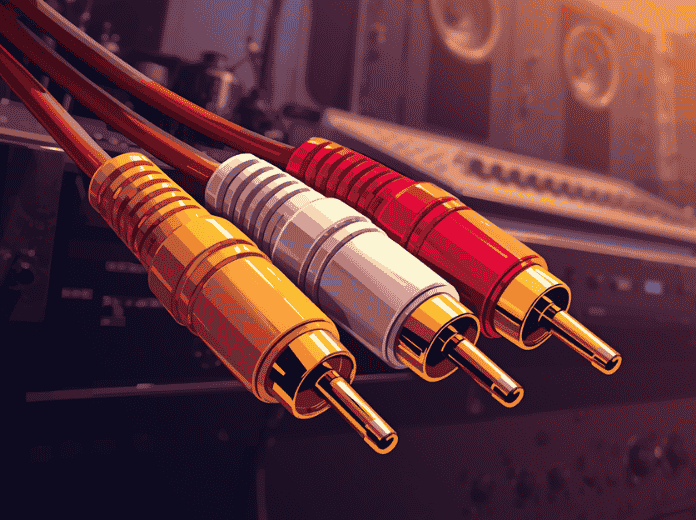
A connector designed in 1940 still ships in more new audio gear this year than USB-C. That is not nostalgia, it is engineering. While digital interconnects keep churning through new revisions every 18 months, the humble RCA cable quietly powers turntables, subwoofers, studio monitors, car amplifiers, and an entire generation of vintage gear restoration projects. This guide skips the recycled history lesson and gets straight to what matters in 2026: where RCA cables outperform their digital replacements, what the spec sheet actually means, and how to buy one that lasts longer than your next phone.
Why a Pre-WWII Connector Refuses to Die
Related OUKETECH resources: custom RF and coaxial cable assemblies; custom telecom cable assemblies.
The pattern repeats every five years. A new digital standard arrives, claims to make analog obsolete, then RCA cables keep selling. The reason is structural, not sentimental.
- Zero handshake latency. An RCA link passes signal the instant the contacts touch. HDMI requires HDCP negotiation that can take 2 to 6 seconds, unacceptable for live audio monitoring.
- Field-repairable. A broken RCA plug costs $2 and ten minutes with a soldering iron. A broken USB-C cable is e-waste.
- Galvanic simplicity. Two conductors, one shield. No firmware, no chip, no licensing fees.
- Backward compatibility across 8 decades. A 1962 tube amp connects to a 2026 DAC with no adapter.
That last point is the quiet superpower. No other consumer interconnect has maintained pin-for-pin compatibility for this long.
What an RCA Cable Actually Is (Spec Sheet View)
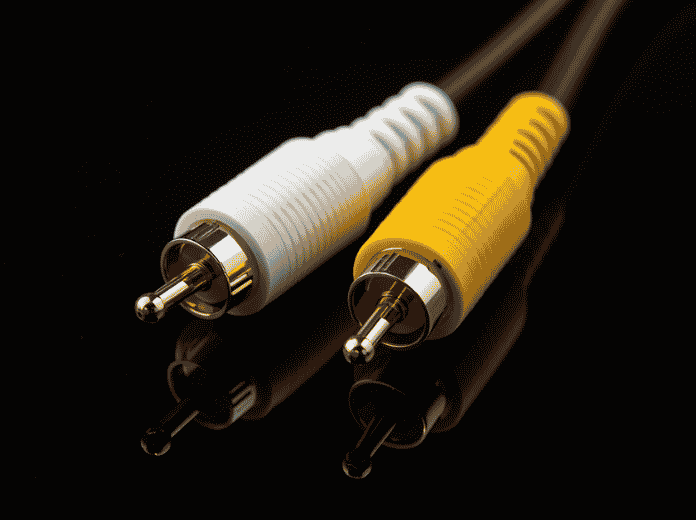
Strip away the marketing and an RCA cable is a coaxial assembly with a specific connector geometry defined loosely under IEC 60169-2. The signal rides on a center conductor, returns through a concentric shield, and terminates at a male plug with a 3.18 mm center pin and an 8.4 mm outer barrel.
Critical specs that determine real-world performance:
- Conductor: stranded oxygen-free copper (OFC) for flexibility, or solid OFC for lower microphonics in fixed installations
- Dielectric: foamed polyethylene or PTFE (lower capacitance equals better high-frequency response)
- Shield: braided copper (85 to 95% coverage) plus aluminum-mylar foil for full RF rejection
- Capacitance: ideally under 100 pF/m for audio, under 70 pF/m for phono cartridges
- Plug plating: 24K gold over nickel, or rhodium for studios in humid climates
Two cables that look identical on a shelf can differ by 40 pF/m in capacitance, enough to roll off treble audibly when driving a long run from a moving-magnet phono cartridge.
The 75-Ohm Confusion No One Explains Properly
Here is where most buying guides go wrong. They tell you “use 75-ohm RCA cables.” That advice is only half true.
Composite Video and S/PDIF Digital Audio
These signals are wideband and impedance-sensitive. A mismatched cable causes reflections, jitter, and visible video ghosting. Use cables built on 75-ohm coaxial stock with matched 75-ohm plugs, rare and worth paying for.
Analog Audio (Line Level, Phono, Subwoofer LFE)
Analog audio operates at frequencies up to 20 kHz. At those wavelengths, a 1-meter cable is electrically invisible. Impedance matching is mathematically irrelevant. What matters is capacitance, shielding, and connector contact integrity.
Vendors who slap “75-ohm” on a stereo audio cable are using marketing, not physics.
RCA vs. Modern Alternatives: Where Each Actually Wins
| Use Case | RCA | HDMI | USB-C Audio | Optical (TOSLINK) | XLR Balanced |
|---|---|---|---|---|---|
| Turntable to phono preamp | Best | No | No | No | Possible (rare) |
| Subwoofer LFE connection | Best | Via AVR only | No | No | Pro audio only |
| DAC to active monitors (short run) | Excellent | No | Limited | No | Best for runs over 3 m |
| Car amplifier signal input | Standard | No | No | No | No |
| 4K video transport | No | Best | Limited | No | No |
| Vintage gear restoration | Only option | Adapter required | Adapter required | No | Adapter required |
The pattern is clear. RCA cables dominate analog signal paths and short-run consumer audio. HDMI owns multichannel video. Each tool keeps its job.
Manufacturing Quality: What Separates a $5 Cable from a $50 One
Price is a weak predictor of quality. Construction is not. The same engineering principles that govern professional wire harness assemblies apply to RCA interconnects. Termination integrity is everything.
Termination Method
- Soldered: superior long-term reliability, gas-tight joint, audiophile-grade choice
- Crimped per IPC-A-620: consistent in factory production, acceptable for OEM volumes
- Compression or screw-on: field-installable but prone to oxidation at the contact point
Shield Termination
The shield must connect 360 degrees around the plug barrel. Pigtail shields, where the braid is twisted into a single wire before soldering, leave a gap in EMI coverage and create ground-loop hum.
Strain Relief
The cable jacket should be mechanically clamped inside the plug, not relying on solder joints to bear pulling force. Look for a metal collet or a molded strain boot.
Compliance Marks
Reputable cables carry RoHS 3, REACH SVHC, and (for North America) UL or CSA marks for the jacket material. Absence of these is a red flag for unknown PVC formulations.
Conductor Metallurgy: Hype vs. Reality
The cable industry loves exotic metals. What actually moves the needle:
- OFC (oxygen-free copper, 99.95%+): proven, affordable, audibly transparent for any home setup. The right choice for 95% of buyers.
- Linear-crystal copper: measurable lower distortion at extreme frequencies, audibility debated, premium price.
- Silver-plated OFC: beneficial only for digital S/PDIF where skin effect at high frequencies matters. Wasted money on line-level analog.
- Pure silver: brighter tonal balance some prefer; not objectively better.
Anyone selling you “quantum-tunneled cryogenically-treated unobtainium conductors” is selling you a story, not signal integrity.
Failure Modes and How to Diagnose Them
| Symptom | Likely Cause | Fix |
|---|---|---|
| One channel drops in and out | Cold solder joint at the center pin | Reflow the joint or replace the plug |
| Constant 50/60 Hz hum | Ground loop or broken shield | Add a ground-loop isolator; check shield continuity |
| Rolled-off treble on phono | Cable capacitance too high for cartridge | Use sub-70 pF/m cable, keep run under 1.2 m |
| Buzz when touching the cable | Microphonic pickup, poor dielectric damping | Reroute away from power cables; upgrade to damped cable |
| Video ghosting on composite feed | Impedance mismatch in audio-grade cable | Swap to true 75-ohm video cable |
| Plug spins on jack | Loose outer barrel, worn detent | Replace plug; check female jack for damage |
Carry a $30 multimeter and a $15 continuity tester. Together they diagnose 90% of RCA cable failures in under two minutes.
Buying Checklist: Verifiable Specs Only
Skip any cable that does not publish these numbers. If the manufacturer hides them, the answer is “not good.”
- Conductor: stranded or solid OFC, AWG 20 to 24 for audio, AWG 18 for subwoofer runs
- Capacitance: published in pF/m or pF/ft
- Shielding: combined foil plus braid, over 90% braid coverage
- Plug: metal body (not plastic-housed), gold or rhodium plating, machined collet strain relief
- Termination: soldered or IPC-A-620 crimped (not screw-on for permanent installs)
- Length: choose the shortest run that fits, every meter adds capacitance and noise pickup risk
- Compliance: RoHS 3, REACH, UL/CSA marks on jacket
For high-volume or custom-length requirements, common in OEM audio products, car audio installations, and pro AV integration, speccing a custom wiring solution usually delivers better consistency than mixing branded retail cables.
2026 Use Cases Where RCA Cables Are Still the Right Answer
Vinyl Revival Setups
Turntable to phono preamp to integrated amp. Every link uses RCA. Capacitance specs matter most here because moving-magnet cartridges are sensitive to total load capacitance. Stay under 200 pF total (cable plus preamp input) for a flat response.
Active Studio Monitors
DAC to left and right powered monitors. RCA is the standard unbalanced input on nearly every nearfield monitor under $1,000 per pair. For runs under 3 meters, there is zero audible advantage to balanced XLR.
Subwoofer Integration
The LFE output on every AV receiver and integrated amp is a single RCA jack. No digital alternative exists at the consumer level. Use a dedicated subwoofer cable with double-braid shielding and a directional shield drain for the cleanest low-end.
Car Audio Amplifier Inputs
Aftermarket head units output line-level signal on RCA pairs. The entire car audio ecosystem is built around this standard. High-voltage pre-outs (4V to 8V) on premium head units require cables with low capacitance to preserve signal-to-noise ratio over the long runs to trunk-mounted amplifiers.
Vintage Gear Restoration
Restoring a 1970s Marantz receiver or a Nakamichi tape deck means RCA is the only connection option. No adapter, no converter, no compromise. The same Ouke Tech engineering principles that apply to modern wire harnesses apply here: clean contacts, proper shielding, and strain-relieved terminations.
Sustainability: The Repairability Advantage
Every sealed USB-C or Lightning cable that fails ends up in a landfill. An RCA cable with a soldered plug can be repaired indefinitely. The connector itself is recyclable brass with gold plating. The copper conductor is fully recoverable. In an era where the EU is mandating USB-C partly for e-waste reduction, RCA cables already deliver what regulators are chasing: a connector you fix instead of throwing away.
For manufacturers building products with RCA jacks, sourcing from a supplier that offers wire harness assemblies with modular, field-replaceable connectors extends product lifespan and reduces warranty claims from connector failures.
Installation Best Practices
- Keep signal cables away from AC power cords. Cross them at 90 degrees if they must intersect.
- Use the shortest cable that reaches. Coil excess, do not bundle it tightly with power cables.
- Label both ends. A $10 label maker saves hours of tracing cables behind a rack.
- Clean contacts annually. DeoxIT D5 on a cotton swab removes oxidation without damaging plating.
- Test before burying. If running cables inside walls, verify every connection works before closing the drywall.
FAQ
Are expensive RCA cables worth it?
Up to about $30 to $50 per cable, yes. You are paying for OFC conductors, proper braided shielding, and gold-plated plugs with real strain relief. Beyond that price point, you are paying for branding, cosmetics, or pseudoscience. A $200 cable does not pass audio any better than a well-built $40 one.
Can I use RCA cables for digital audio?
Yes, for S/PDIF coaxial digital. But you must use a cable built on true 75-ohm coaxial stock. A standard audio RCA cable will cause bit errors and jitter on digital signals. Look for cables explicitly labeled “digital coaxial” or “75-ohm S/PDIF.”
How long can an RCA cable be before signal loss becomes a problem?
For line-level analog audio, 10 to 15 meters is practical with good low-capacitance cable. For phono-level signals from a turntable, keep it under 1.5 meters. For composite video, 30 meters with proper 75-ohm cable. For S/PDIF digital, 10 meters maximum per the AES3 standard.
What is the difference between RCA and phono connectors?
They are the same physical connector. “Phono” is short for phonograph, which is what RCA originally designed the connector for in the 1940s. In modern usage, “phono cable” sometimes specifically means a low-capacitance cable optimized for turntable cartridge signals.
Do gold-plated RCA connectors actually make a difference?
Yes, but not for the reason most people think. Gold does not oxidize, so the contact surface stays clean over decades. Nickel-plated connectors develop a resistive oxide layer over time. The conductivity difference between gold and nickel is negligible at audio frequencies. The real benefit is long-term reliability, not sound quality.
Conclusion
RCA cables have outlasted SCART, DVI, FireWire, component video, and at least four generations of proprietary digital connectors. They survive because they solve a narrow set of problems perfectly: short-run unbalanced analog signal transfer with zero complexity, zero latency, and zero licensing. In 2026, for turntables, subwoofers, studio monitors, car audio, and vintage gear, there is still no better tool for the job.
Whether you are speccing OEM audio interconnects, building a complete wire harness assembly, or need a fully engineered custom wiring solution for your product line, the same principle applies: the right cable, built to spec, outlasts the gear it connects.