OUKETECH is a China battery wire harness manufacturer building custom assemblies from customer drawings, BOMs, pinouts, samples, and application requirements. As an OEM battery wire harness manufacturer, the team supports prototypes, small batches, high-mix programs, and repeat high-volume production.
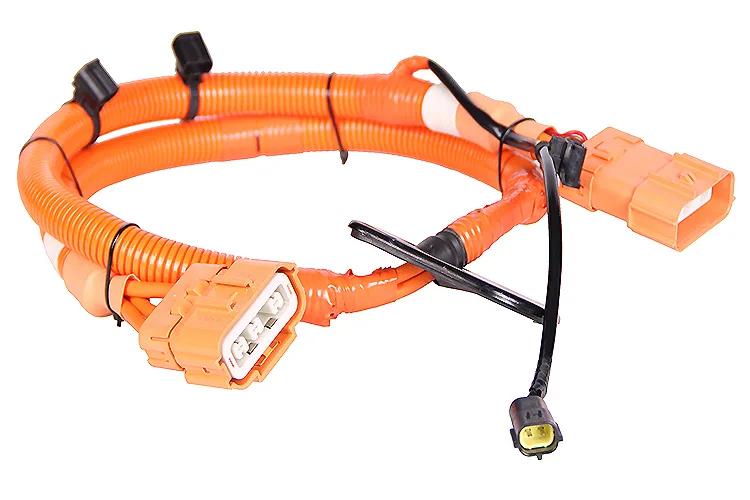
A battery harness is rarely a catalogue item. Cable size, current load, connector keying, terminal orientation, branch lengths, protection, labels, and routing must fit the equipment. As a custom battery wire harness manufacturer, OUKETECH reviews those details before material preparation and assembly.
The same project path can support a battery pack wire harness, battery module wiring harness, BMS wiring harness, battery power cable assembly, or mixed power-and-signal loom. Buyers comparing a battery pack wire harness manufacturer or BMS wiring harness manufacturer should define voltage, current, temperature, flexing, vibration, sealing, and applicable standards in the approved specification.
Manufacture from an approved drawing, BOM, pinout, cable schedule, or controlled sample.
Validate fit, routing, polarity, labels, connector retention, and agreed inspection points before release.
Keep part numbers, revisions, materials, work instructions, and test requirements separated across product variants.
Transfer an approved assembly into repeat production with controlled documentation and agreed inspection criteria.
Specify conductor size, insulation, cable length, color coding, routing, bend requirements, and termination details. A custom battery cable assembly manufacturer should review current load, acceptable voltage drop, ambient conditions, and installation constraints. The same review applies to a heavy gauge battery cable assembly or custom battery lead assembly.
Projects may call for a battery cable with ring terminals, a custom battery connector harness, boots, heat-shrink, conduit, braided sleeve, clips, labels, or a battery harness with fuse holder. Final brands, part numbers, materials, and substitutions require customer approval.
A battery management system wire harness can combine voltage-sense, temperature-sensor, communication, and auxiliary circuits. Pinout, shielding, separation, routing, and connector retention should be specified for the target pack and controller.
Define drawing revision, BOM, approved component list, wire and terminal references, labels, packaging, inspection records, and supplier-document requirements. This supports consistent build-to-print battery harness production.
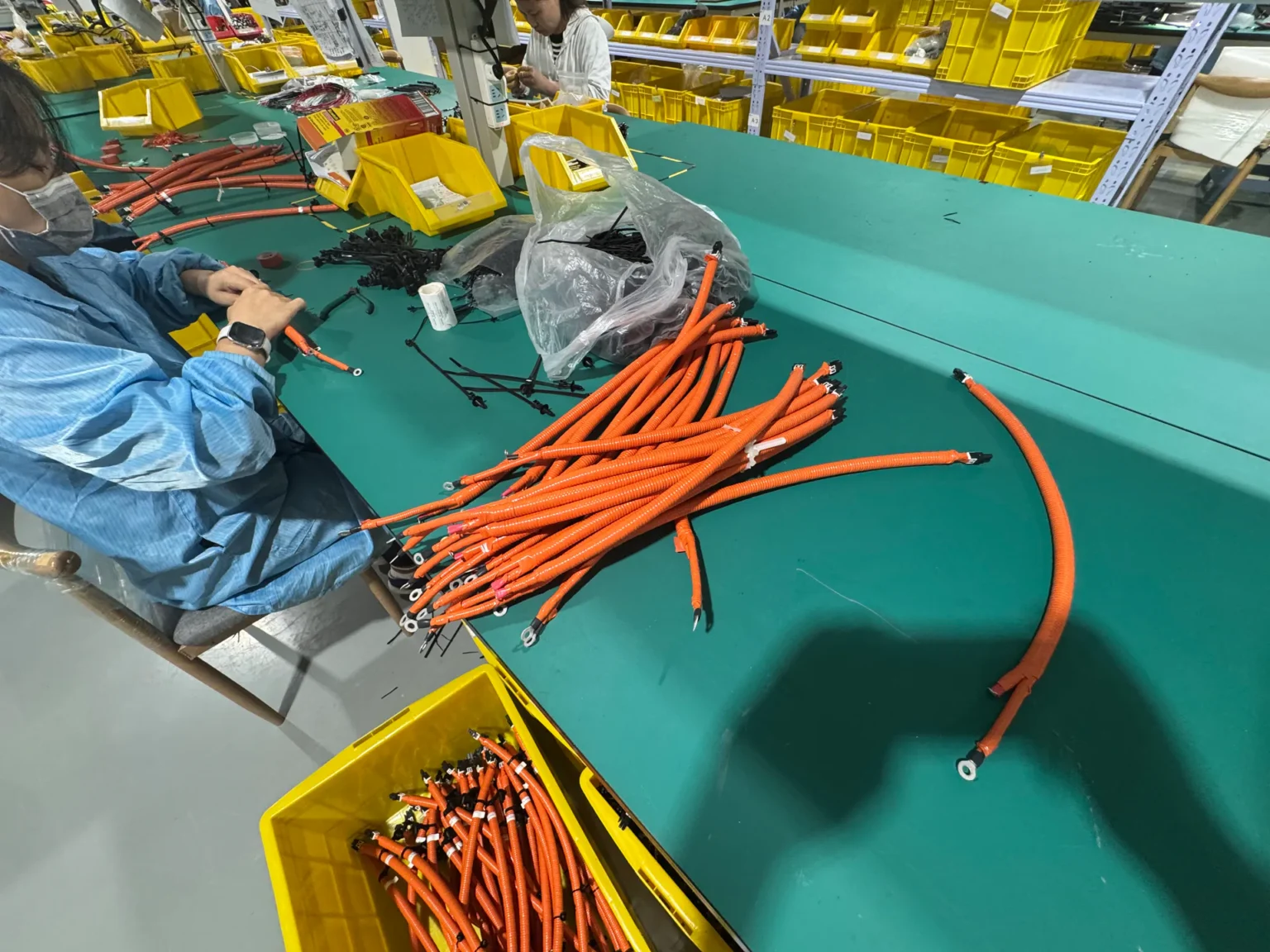
An EV battery wiring harness manufacturer may be asked to build pack interconnects, low voltage battery signal harnesses, auxiliary power leads, or a high voltage battery cable assembly. The customer-controlled electrical, mechanical, environmental, and documentation requirements govern each design.
An energy storage battery harness manufacturer may be asked to build module connections, rack wiring, power distribution, sensing circuits, and serviceable interconnects. Buyers looking for a BESS wire harness supplier should include architecture, conductor sizes, connector part numbers, routing, protection, and tests in the RFQ.
An industrial battery wire harness may serve mobile equipment, automation, charging equipment, or backup systems. Buyers evaluating a UPS battery cable assembly manufacturer, forklift battery cable harness, or lithium battery wiring harness should provide the drawing and application requirements that control the build.
Confirm the drawing, BOM, pinout, sample, application, quantity, annual demand, and unresolved technical points.
Check cable routing, connector and terminal compatibility, protection, labeling, manufacturability, and approved alternatives.
Build the agreed sample quantity for fit, function, polarity, routing, and documentation review.
Freeze the accepted revision, BOM, work instructions, inspection points, and test plan.
Plan small-batch, high mix battery wire harness assembly, or high-volume production around the approved configuration and forecast.
Complete the agreed checks, identification, packaging, and project documentation before shipment.
Battery harness continuity testing, polarity checks, dimensional inspection, label verification, and workmanship review can be planned against the approved drawing and test requirements. Where a project calls for a battery harness crimp pull test, insulation resistance, hi-pot, functional checks, or customer-specific records, the method, limits, equipment, and sampling must be agreed before quotation. This evidence helps procurement compare a battery wiring harness supplier or battery cable assembly supplier against the same approved criteria.
OUKETECH’s current website presents IATF 16949, ISO 9001, and ISO 13485 quality-system certifications. Procurement teams can request the applicable certificates and project-specific quality documentation during supplier review rather than assuming that every standard or test applies to every battery assembly.
For adjacent sourcing needs, use the links below to review the relevant OUKETECH capability pages.
Whether you need a battery harness prototype manufacturer, low volume battery harness production, or high volume battery harness manufacturing, send the information currently available. OUKETECH can identify the remaining inputs required for a manufacturing review and quotation.
Drawing, BOM, pinout, cable schedule, or representative sample
Battery chemistry and system/application description
Voltage, continuous and peak current, and acceptable voltage drop
Wire sizes, insulation, colors, branch lengths, and routing constraints
Connector, terminal, stud size, keying, locking, and mating-part details
Temperature, vibration, flexing, fluids, sealing, and installation conditions
Required standards, tests, inspection records, labels, and packaging
Prototype quantity, order quantity, annual demand, and target schedule
Approved substitutions, customer-supplied components, and open questions
Yes. OUKETECH can review drawings, BOMs, pinouts, cable schedules, and controlled samples. Any reverse engineering, redesign, or component substitution must be defined and approved during the project review.
Send the electrical requirements, application, drawing or sample, conductor sizes, connector and terminal details, routing, protection, quantities, test requirements, and delivery destination. Missing details can be identified during review.
OUKETECH supports prototyping, low-volume and high-mix projects, as well as repeat production. MOQ, tooling, sample lead times, and production schedules depend on design complexity and material availability.
The team can review mixed power, sensing, communication, and auxiliary circuits. Separation, shielding, routing, connector selection, current load, and test requirements must be controlled by the approved design.
Typical project discussions may include continuity, polarity, dimensions, labels, workmanship, pull-force, insulation resistance, hi-pot, or functional checks. The applicable method, limits, records, and sampling are confirmed per project.
OUKETECH can review specified connector and terminal part numbers and, when requested, potential alternatives. No substitution should be used in production without customer approval.
Send your drawing, BOM, pinout, sample details, quantities, and test requirements. OUKETECH will review the information needed to prepare a project-specific manufacturing quotation.
Related OUKETECH resources: custom high-voltage wiring harnesses; custom solar cable assemblies; custom cable assembly manufacturing.