

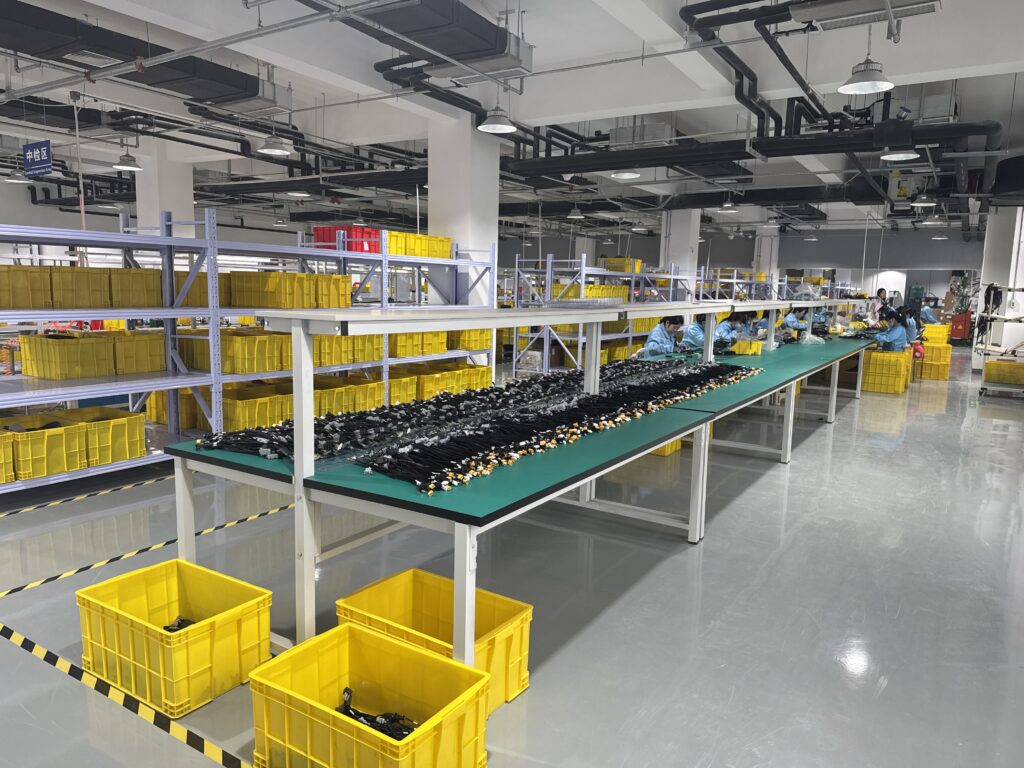
Custom cable looms help equipment manufacturers connect power, control, and signal components in a layout designed for a specific machine. Instead of routing individual wires during final assembly, an equipment builder can install a prepared loom with defined branches, connectors, labels, and lengths.
The result depends on how well the loom matches the equipment’s electrical design and physical layout. A clear drawing, bill of materials (BOM), pinout, and operating environment give a manufacturer the information needed to review the build and plan inspection.
What Is a Custom Cable Loom?
A cable loom—also called a wiring harness or wire harness—is an organized group of wires and cables assembled to connect parts of a system. Depending on the application, it may include conductors, connectors, terminals, protective sleeving, labels, clips, and branch points.
A custom loom is built to project-specific requirements. Those requirements may define:
- Wire or cable type, conductor size, color, and length
- Connector series, keying, pin assignment, and termination
- Branch locations and breakout lengths
- Shielding, sleeving, conduit, or other protection
- Labels, identification, and routing features
- Inspection and electrical test requirements
The term “custom” describes how the assembly is specified; it does not by itself establish a particular quality level or certification. Those expectations should be documented separately.
Why Equipment Manufacturers Use Custom Looms
More consistent equipment assembly
A loom with specified branch lengths and connector positions can give assembly teams a repeatable routing reference. It can also reduce the need to cut, strip, and terminate multiple wires at the equipment build stage. The amount of time saved depends on the equipment design and how much work the loom replaces.
Better fit with the machine layout
Equipment often has limited routing space, moving parts, heat sources, or service access requirements. A loom can be designed around the intended path, mounting points, and connection locations. Final routing still needs to be checked against the actual machine and its operating conditions.
Easier identification and service
Labels, wire colors, connector keying, and documented pinouts can help technicians identify connections during installation and maintenance. These features should follow the equipment manufacturer’s documentation and service practices.
A defined interface between teams
A complete loom specification gives engineering, procurement, production, and service teams a shared reference. It can also make design changes easier to track when the revision, affected assemblies, and approval process are clearly controlled.
What to Define Before Requesting a Quote
The more complete the input package, the easier it is to review the design and identify open questions before production.
| Information | Examples |
|---|---|
| Application | Equipment type, function of the loom, and installation location |
| Electrical design | Schematic, pinout, circuit list, voltage and current requirements |
| Materials | Wire and cable specifications, connector part numbers, terminals, seals, and protection |
| Physical layout | Overall lengths, branch dimensions, connector orientation, and routing constraints |
| Environment | Expected temperature, moisture, vibration, chemicals, abrasion, or movement |
| Production needs | Prototype quantity, expected order volume, packaging, and delivery schedule |
| Quality requirements | Inspection points, electrical tests, documentation, and applicable standards |
If some details are still under development, identify them as open items instead of treating assumptions as approved requirements. A drawing, BOM, sample, or pinout can provide a starting point for review.
Design Details That Affect Fit and Reliability
Wire routing and branch geometry
Overall length alone does not fully describe a loom. Branch lengths, breakout positions, connector orientation, and the route through the equipment can affect installation. Where possible, provide dimensions from a consistent reference point and identify any areas where extra length or service loops are required.
Connector and terminal selection
Connector selection should account for electrical requirements, mechanical fit, mating interfaces, environmental exposure, and service needs. Part numbers and approved alternatives should be stated in the specification. Substitutions should be reviewed because a physically similar connector may differ in keying, contact arrangement, sealing, or electrical rating.
Protection and environment
Sleeving, conduit, boots, grommets, and shielding may help address specific routing or environmental needs. The appropriate materials depend on the equipment’s actual exposure and design requirements. Avoid specifying protection based only on a general description such as “industrial”; document the conditions the loom must withstand.
Labels and revision control
Labels should remain readable and correspond to the drawing, pinout, and service documentation. Each released package should identify its revision so that engineering changes can be reviewed and implemented consistently.
Inspection and Testing
Inspection requirements should be agreed before production. Depending on the design and purchase specification, they may include visual checks, dimensional checks, connector and pinout verification, continuity testing, or other electrical tests. Test scope and acceptance criteria should be explicit; “100% tested” is not meaningful unless the required tests are defined.
IPC/WHMA-A-620 provides requirements and acceptance criteria for cable and wire harness assemblies, including crimped, mechanically secured, and soldered interconnections. Buyers can reference the applicable revision and product class in their purchasing documents when appropriate. The standard does not automatically define every project’s inspection frequency or all customer-specific tests, so those details should still be agreed by the buyer and supplier.
From Prototype to Production
A practical process often begins with a design review, followed by a prototype or first article for fit and interface checks. Once the assembly is approved, the drawing, BOM, test requirements, and revision should be controlled for production.
For equipment makers, the prototype review is a chance to confirm practical details such as connector access, branch reach, routing clearance, and label visibility. Recording changes before the production release helps reduce uncertainty for later builds.
Choosing a Cable Loom Manufacturing Partner
When evaluating a supplier, ask how they review drawings and BOMs, manage revisions, handle approved substitutions, and document inspection results. Also confirm how prototypes, production orders, packaging, and changes will be coordinated.
OUKETECH manufactures custom wire harnesses and cable assemblies for equipment manufacturers and engineering teams. Buyers can provide a drawing, BOM, approved sample, or performance requirements for project review. Learn more about custom cable assemblies and control cable assemblies for industrial equipment.
Frequently Asked Questions
Are cable looms and wire harnesses the same thing?
The terms are often used interchangeably, though terminology can vary across industries and companies. Define the assembly and its requirements in the drawing or purchase specification.
What information is needed to start a custom loom project?
A drawing, BOM, pinout, or approved sample is a useful starting point. Include the application, expected quantity, material requirements, operating environment, and inspection or test criteria where available.
Should a prototype be approved before production?
For a new or revised design, prototype review can help confirm fit, routing, connector access, and documentation. The project team should define what constitutes approval before production begins.
Does IPC/WHMA-A-620 replace the product specification?
No. It provides assembly requirements and acceptance criteria, while the project documents define the specific materials, configuration, tests, and customer requirements for the loom.
Plan Your Custom Cable Loom
A well-defined cable loom starts with a clear equipment interface and controlled requirements. Share your drawing, BOM, pinout, sample, target quantity, and inspection needs with a manufacturer to begin a project review.