OUKETECH manufactures custom power cable assemblies for industrial machines, control cabinets and other OEM equipment. We build AC and DC power leads to your approved drawing and BOM, with the mating ends, length, routing and inspection requirements defined for your equipment.
Send a drawing or sample details with your operating load and target quantities. We can review the build before you commit to tooling or a production order.
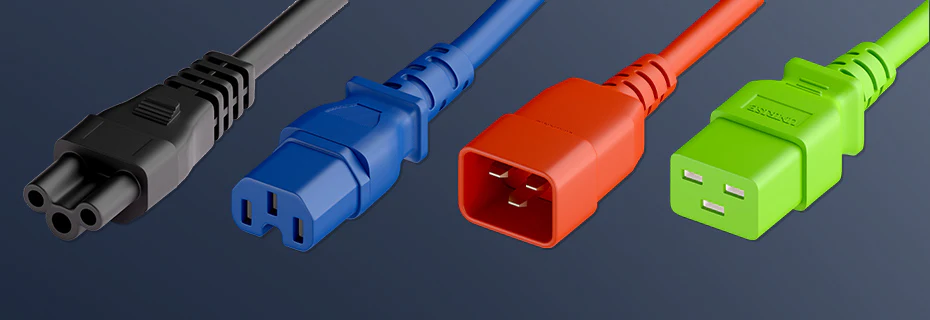
Connect a DC supply to a controller, drive or distribution module. Define polarity, load, connector keying and the allowable voltage drop at the equipment terminals.
Route power from an inlet or terminal block to an internal supply or module. Provide the mating parts, wiring diagram, protective earth requirements and clearance around each termination.
For a detachable mains cord set, specify the destination market, wall plug, appliance inlet, cable length and required approvals. We review the exact construction and documentation needed for your project.
Put the mating interface and electrical load on the same drawing package. This gives engineering and procurement a common basis for comparing quotes.
Review the conductor, contacts and mating connector together. The number of loaded positions and the temperature inside the enclosure affect connector heating. For longer DC runs, confirm the voltage drop across the supply and return paths under load.
Check the connector latch, fastener access and cable exit with the enclosure closed. If you need custom strain relief, review mold access and tooling separately with our overmolded cable assembly team.
Keep exact contacts, housings and wire on the BOM. If a specified part has limited availability, review the fit, electrical ratings and approval impact of any proposed alternate before releasing it for production.
Define dimensional and visual checks for length, labeling, termination and strain relief. For electrical inspection, provide the point-to-point connection map and the criteria for continuity, unintended shorts and polarity where applicable.
If your application needs dielectric withstand, insulation resistance, termination pull force or temperature-rise testing, include the method, conditions, limits and reporting format in the RFQ. Agree which checks belong in sample qualification and which apply to production lots before releasing the test plan.
Confirm the drawing revision, approved components, quantities and test scope. Ask for material, tooling and inspection costs to be identified where they affect the quote.
Check the cable against your actual mating parts, enclosure and routing. Record any changes to the drawing and BOM before approving the production build.
Release the approved revision, test plan and packaging instructions. Share expected order frequency and annual volume so material availability and delivery can be reviewed.
Yes. Share photos of both ends, visible part markings, approximate length and how the cable is used. We can identify the missing inputs for a quote. Confirm the pin map, mating parts and acceptance criteria before approving a build.
Send a list of destination countries and the equipment inlet for each variant. For mains cords, identify the required plug, ratings and finished-assembly approval documents by market so they can be evaluated separately.
For mixed power, signal and data builds, see our custom cable assembly capabilities. For battery pack integration or high-voltage connections, see our battery wiring harnesses and high-voltage wiring harnesses.
Attach your drawing, BOM or sample photos. Include your operating voltage, continuous and peak current, mating part numbers, and target sample and production quantities.
Add your destination market, approval or test requirements, and target delivery date. If the design is still open, tell us which decisions you need help reviewing.