

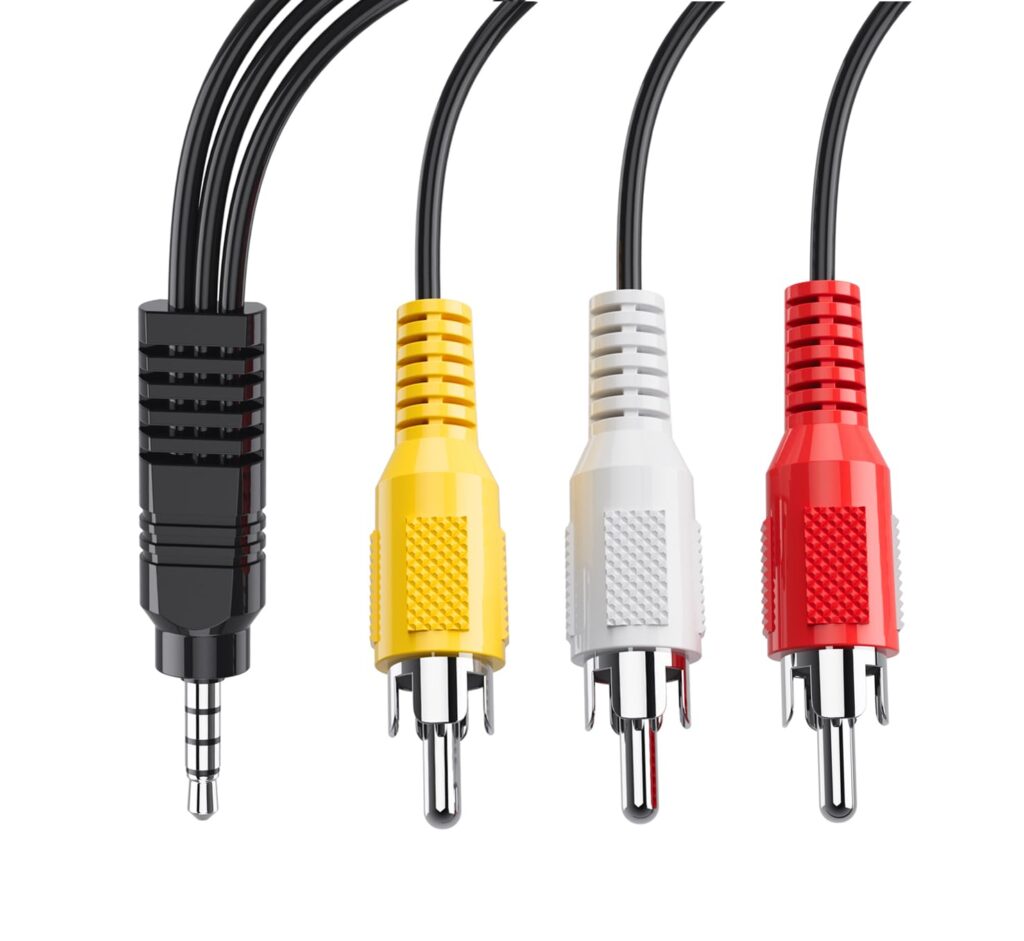
1. Introduction: AV Cables in Industrial and Commercial Applications
In commercial electronics, industrial automation, and OEM equipment manufacturing, reliable signal transmission remains a cornerstone of system uptime. An Audio/Video (AV) cable is far more than a simple interconnect line; it is a critical signal pathway responsible for transporting low-voltage analog waveforms or high-bandwidth high-definition digital bitstreams between media sources, controllers, and output displays.
While consumer retail markets focus on off-the-shelf connectivity, industrial systems integrators and equipment manufacturers require specialized cable assemblies designed for severe mechanical flex, electrical noise, and thermal stress. Sourcing improper cabling results in signal degradation, electromagnetic interference (EMI), packet loss, and costly operational downtime.
As a specialized OEM AV Cable Manufacturer, Ouke Tech provides complete turnkey solutions—from engineering design and prototype validation to full-scale volume manufacturing. Whether integrating high-definition digital interfaces into medical diagnostic monitors or deploying wholesale AV cables for industrial / commercial applications, understanding cable construction, pinout specifications, and insulation compliance is essential for optimized procurement.
2. What is an AV Cable? Core Types & Signal Transmission Principles
Audio/Video cables bridge signal sources (cameras, industrial PCs, media servers, sensors) to destination devices (displays, processors, audio amplifiers, recorders). They operate across two distinct signal paradigms: Analog and Digital.
                           ┌─────────────────────────────────────────┐
                           │          AV Cable Architecture          │
                           └────────────────────┬────────────────────┘
                                                │
                  ┌─────────────────────────────┴─────────────────────────────┐
                  ▼                                                           ▼
       ┌────────────────────┐                                      ┌────────────────────┐
       │   Analog Signals   │                                      │  Digital Signals   │
       └──────────┬─────────┘                                      └──────────┬─────────┘
                  │                                                           │
     ┌────────────┼────────────┐                                 ┌────────────┼────────────┐
     ▼            ▼            ▼                                 ▼            ▼            ▼
  Composite     S-Video     Component                          HDMI / DP     SDI / BNC   Hybrid Custom
  (RCA, BNC)    (DIN)      (RGB/YPbPr)                        (Differential) (75Ω Coax)   (Power+Data)
2.1 Analog Audio & Video Cable Assemblies
Analog cables convey continuous electrical voltage waveforms representing sound or luminance/chrominance video data. Because analog signals are susceptible to external voltage spikes and high-frequency noise, conductor purity and shielding performance are critical.
- Composite Video & RCA Assemblies: Uses a single 75-ohm coaxial channel for composite video alongside paired unbalanced audio channels. Widely utilized in legacy security systems, industrial monitoring, and basic diagnostic equipment.
- S-Video (Separate Video): Separates luminance (Y) and chrominance (C) over a multi-pin DIN layout, eliminating color-bleeding artifacts common in composite signals.
- Component Video (YPbPr / RGBHV): Splits video into three distinct channels (Luminance, Blue-Difference, Red-Difference) or five discrete lines (RGB + Horizontal/Vertical Sync). Commonly found in broadcast engineering and high-end video walls.
- VGA (Video Graphics Array / D-Sub 15): A 15-pin analog display interconnect engineered for RGB signals. Still extensively deployed in legacy industrial control panels and embedded systems.
2.2 Digital Audio & Video Interfaces
Digital interfaces transmit binary packets (0s and 1s) using high-speed differential signaling or serial data streams, supporting resolutions up to 4K/8K and high-refresh-rate embedded video feeds.
- HDMI (High-Definition Multimedia Interface): Transmits uncompressed digital audio and video via Transition Minimized Differential Signaling (TMDS) or Fixed Rate Link (FRL). Requires precision-controlled impedance (100 ohms differential) across high-density twisted pairs.
- DisplayPort (DP): Utilizes packetized data transmission over micro-coaxial or twisted-pair conductors, ideal for multi-monitor industrial workstations and embedded display controllers.
- SDI (Serial Digital Interface / BNC): The standard in professional broadcast and surgical display systems. Uses heavy-duty 75-ohm coaxial cabling with lockable BNC connectors for long-distance uncompressed digital video transmission.
2.3 Custom Multi-Pin Hybrid Cable Harnesses
For specialized equipment, standard off-the-shelf connectors often fail to meet physical footprint, IP-rating, or combined signal-power delivery needs. OEM manufacturers frequently integrate video conductors, power supply lines, and RS485/CAN-bus data wires into a single composite cable assembly.
If your design requires hybrid signal delivery, explore our custom manufacturing capabilities for Custom Wire Harnesses to simplify system routing and streamline enclosure integration.
3. Key Technical Specifications B2B Buyers Must Evaluate
When executing bulk AV cable supply / procurement / sourcing, relying on generic product descriptions often leads to field failures. Technical buyers must review line drawings, datasheet metrics, and material certifications.
       +-----------------------------------------------------------------------+
       |                         AV Cable Structure                            |
       |                                                                       |
       |    [Outer Jacket] -> [Braided Shield] -> [Foil Shield] -> [Conductor] |
       |                                                                       |
       |   (PVC / TPE / PUR)   (Tinned Copper)    (Mylar/Alum)     (OFC Copper)|
       +-----------------------------------------------------------------------+
3.1 Conductor Material & Gauge Selection (AWG)
The conductor core directly dictates attenuation, signal integrity, and resistance over distance.
- Oxygen-Free Copper (OFC): Premium grade copper (>99.99% purity) providing minimum electrical resistance, superior signal fidelity, and high fatigue resistance under flexing. Recommended for all industrial and mission-critical applications.
- Tinned Copper (TC): OFC strands coated with a thin tin layer to prevent oxidation in high-humidity or corrosive environments. Ideal for marine, automotive, and outdoor installations.
- Copper-Clad Aluminum (CCA) [WARNING]: Aluminum core coated with a thin copper skin. Not recommended for commercial AV installations. CCA exhibits high DC resistance, brittle tensile strength, and poor flex fatigue resistance.
| Conductor Type | Electrical Conductivity | Corrosion Resistance | Mechanical Flex Life | Suitable for B2B Industrial Use? |
|---|---|---|---|---|
| Oxygen-Free Copper (OFC) | Excellent (100% IACS) | High | High | Yes (Recommended) |
| Tinned Copper (TC) | High (~98% IACS) | Superior | Very High | Yes (Extreme Environments) |
| Copper-Clad Aluminum (CCA) | Poor (~60-65% IACS) | Low | Very Low | No (High Failure Rate) |
3.2 Shielding Efficiency & EMI/RFI Protection
Industrial facilities are rich in electromagnetic noise generated by variable frequency drives (VFDs), electric motors, and wireless transmitters. Proper shielded AV cables are essential to maintain signal clarity.
- Aluminum Mylar Foil Shielding: Provides 100% coverage against high-frequency radio frequency interference (RFI).
- Tinned Copper Braid Shielding: Offers high mechanical strength and protection against low-frequency electromagnetic interference (EMI), with coverage typically ranging from 80% to 95%.
- Combination (Foil + Braid / Dual Shielding): The gold standard for commercial installations, delivering comprehensive defense across the entire frequency spectrum.
3.3 Jacket Compound Selection & Environmental Ratings
The outer jacket defends internal conductors against abrasion, chemical exposure, temperature extremes, and mechanical crushing.
- PVC (Polyvinyl Chloride): Standard indoor grade, cost-effective, flame retardant options available (UL94-V0).
- TPE / TPU (Thermoplastic Elastomer / Polyurethane): High-flexibility, oil-resistant, ultra-durable compounds suited for dynamic robotics, drag chains, and outdoor installations.
- LSZH (Low Smoke Zero Halogen): Mandated in public transport, aviation, and enclosed commercial venues to eliminate toxic halogen gas emissions in fire scenarios.
- Fire-Retardant / Outdoor Rated AV Cables: UV-stabilized jackets rated to UL VW-1, CMP (Plenum), or CMR (Riser) specifications ensure full building code compliance.
3.4 High-Reliability Audio Video Cable Specification & Pinout Mapping
For custom OEM designs, pinout accuracy determines hardware compatibility. Engineering drawings must explicitly specify pin assignments, drain wire grounding points, strain relief overmold profiles, and connector contact plating (e.g., 3μ” to 50μ” gold plating for corrosion-free mating cycles).
4. Commercial & Industrial Application Scenarios
Standard consumer cables are built for static home environments. Commercial and industrial installations demand ruggedized design parameters tailored to specific operational hazards.
+----------------------------------------------------------------------------------+
|                            Target Industrial Sectors                             |
+------------------------+-------------------------+-------------------------------+
| Medical Electronics    | Automotive & Mobile AV  | Industrial Automation & Security|
| - Surgical Monitors    | - Vehicle Infotainment  | - Machine Vision Cameras      |
| - High-Fidelity Video  | - Fleet Camera Systems  | - Rugged Industrial Displays  |
| - Antibacterial Jackets| - High-Flex Assemblies  | - IP67 Waterproof Connectors  |
+------------------------+-------------------------+-------------------------------+
- Industrial Automation & Machine Vision: High-resolution digital AV cables carry frame-grabber data from cameras to industrial controllers. These require high-flex stranded conductors capable of surviving millions of bending cycles in robotic drag chains.
- Medical Diagnostic & Surgical Systems: Medical-grade display cables require stringent biocompatibility, chemical resistance against aggressive disinfectants, low leakage currents, and zero signal distortion.
- Automotive & Commercial Fleet Infotainment: In-vehicle entertainment, driver monitoring systems, and digital rearview mirrors depend on vibration-proof connectors with secondary locking mechanisms (FAKRA, HSD, or custom latching overmolds).
- Commercial Digital Signage & Control Rooms: High-density video distribution arrays rely on bulk custom AV assemblies with precision impedance matching to eliminate ghosting or signal degradation over extended cable runs.
For specialized heavy-duty power routing alongside control signaling in transport or energy equipment, review our production lines for Battery Cable Assemblies.
5. How to Source Custom AV Cables (OEM/ODM Sourcing Guide)
Procuring custom cable assemblies requires an experienced manufacturing partner capable of translating technical requirements into cost-effective production processes.
  1. Engineering Drawing & Pinout Review
     └─► 2. Material Specification & Tooling Design
          └─► 3. Prototype Fabrication & Sample Validation
               └─► 4. Automated Assembly & 100% Quality Testing
                    └─► 5. Mass Production & Global Logistics
5.1 Low MOQ Cable Harness Customization Strategies
Traditional cable factories often require minimum order quantities (MOQs) of 5,000+ units, restricting small-to-medium enterprises and prototype developers. At Ouke Tech, we offer low MOQ cable harness customization, enabling OEMs to access custom tooling, specialized jacket colors, and bespoke pinouts without excessive inventory risks.
5.2 Tooling, Overmolding, and Strain Relief Engineering
Custom overmolding provides superior strain relief compared to snap-together plastic shells. By injecting molten PVC, TPU, or PE directly around the connector solder joint and wire bundle, internal connections are fully sealed against ingress, moisture, vibration, and mechanical pulling forces.
As a dedicated Custom AV Cable Assembly Manufacturer, Ouke Tech handles:
- Custom mold tool design and CNC fabrication.
- Right-angle and low-profile overmolded connector housings.
- Integrated mechanical strain relief boots tailored to specific cable bend radii.
- Custom branding, laser etching, and custom wire tagging.
6. Common Pitfalls in Bulk AV Cable Procurement & Quality Control
Procurement managers must guard against hidden cost-cutting practices that compromise long-term product reliability.
[Common Sourcing Pitfalls]
 ├── 1. Substituted CCA (Copper-Clad Aluminum) instead of Pure OFC Copper
 ├── 2. Insufficient Shielding (e.g., 40% Braid vs. Specified 85% Braid)
 ├── 3. Incorrect Impedance Control (Causing Signal Reflection & Jitter)
 └── 4. Poor Strain Relief (Leading to Wire Fatigue & Pin Disconnection)
- Undersized Conductors: Suppliers substituting thinner gauge wire (e.g., marking 28 AWG cable as 24 AWG), causing higher resistance, voltage drops, and signal distortion over distance.
- Inadequate Shield Coverage: Reducing braid coverage below 80% to save copper weight, leaving signals exposed to EMI in noisy industrial environments.
- Uncontrolled Cable Impedance: In digital cables (HDMI, SDI, DP), inconsistent twist pitches or varying dielectric thickness disrupt differential impedance, leading to data jitter, bit errors, and display flicker.
- Lack of Testing Standards: Relying on basic visual inspection rather than automated electrical testing.
7. Compliance & Industry Certifications (RoHS, REACH, UL, ISO9001)
Global compliance is non-negotiable when exporting finished machinery or electronic equipment to North America, Europe, and Asia-Pacific markets.
- ISO 9001:2015 Certification: Guarantees standard operating procedures across incoming material inspection, process control, and final product audits.
- UL Wiring Harness Certification: Ensures cable materials comply with Underwriters Laboratories flammability standards (e.g., VW-1, FT1, UL758, UL13).
- RoHS & REACH Compliance: Restricts hazardous substances (lead, cadmium, mercury, phthalates) in compliance with European Union environmental mandates.
- IPC/WHMA-A-620 Workmanship Standards: The globally accepted standard for cable and wire harness assembly, defining precise acceptance criteria for crimping, soldering, potting, and strain relief.
8. Frequently Asked Questions (B2B Procurement FAQ)
9. Conclusion & RFQ Consultation
Selecting the right AV cable architecture is a critical engineering decision that impacts overall equipment reliability, signal clarity, and long-term operating costs. From selecting pure oxygen-free copper conductors to engineering robust strain-relief overmolds, partnering with a qualified manufacturer ensures your products meet international quality and compliance standards.
As a trusted Custom AV Cable Assembly Manufacturer, Ouke Tech combines technical engineering expertise, comprehensive quality testing, and flexible production volumes to support your supply chain requirements.
Ready to optimize your cable harness procurement?
- Visit our Homepage: Ouke Tech Official Website
- Explore Custom Assemblies: OEM Wire Harness & Cable Assemblies
- Contact Engineering & Sales: Send us your technical drawings or project specifications today for a rapid 24-hour RFQ turnaround and complimentary prototype evaluation!