

A second cable assembly supplier can help an OEM manage capacity constraints, supplier disruption, and component availability. However, a cable that looks identical to an approved assembly may behave differently during installation, electrical operation, or repeated movement.
Effective second source cable assembly qualification requires more than matching a quotation and approving a sample. Procurement, engineering, and quality teams need a controlled process for reviewing drawings, confirming materials, evaluating manufacturing methods, and validating production-representative assemblies. The objective is documented evidence that the alternative supplier can repeatedly manufacture the required assembly, with a clear record of the configurations and processes covered by approval.
1. Define What the Second Source Must Achieve
Before requesting samples, agree on the reason for adding a supplier. A backup source for emergency orders may require a different onboarding plan from a supplier receiving a regular share of production. Define the part numbers and drawing revisions, expected demand and ramp, approved materials, application conditions, quality records, traceability, and authority to approve deviations.
Examine whether the proposed second source reduces supply risk. Two assembly suppliers may purchase the same connector from the same constrained upstream source. Adding another assembler does not necessarily remove that bottleneck. For OEM projects involving custom cable assembly manufacturing, the RFQ should include both technical requirements and the intended sourcing strategy.
2. Establish a Controlled Drawing and Specification Package
An incumbent sample is useful for understanding routing and construction, but it cannot communicate every design requirement. It may contain undocumented substitutions or production variation. When qualifying an alternative wire harness supplier, establish an approved baseline before evaluating equivalence.
- Assembly drawing: part number, revision, dimensions, tolerances, branch locations, and connector orientation.
- Wiring diagram or pinout: cavity identification, viewing direction, connections, splices, and unused positions.
- BOM: manufacturer part numbers, approved alternatives, and restricted substitutions.
- Cable specification: conductor construction, insulation, jacket, shielding, and application ratings.
- Inspection and test requirements: applicable workmanship criteria, methods, limits, conditions, and reporting.
- Identification and packaging: labels, revision marking, lot identification, and handling.
Connector viewing direction deserves particular attention: a cavity diagram viewed from the mating face can be misread from the wire-entry side. Ask the candidate supplier to return a drawing review with exceptions clearly marked. Resolve conflicting requirements through engineering approval. Both parties should acknowledge the same revisions before sampling begins.
Before requesting a quotation, review the drawing and specification requirements.
3. Review Materials Beyond Basic Part Matching
Wire and cable
Matching AWG alone does not establish equivalence. Review conductor material, strand construction, insulation thickness, outside diameter, temperature rating, flexibility, and relevant environmental resistance. A cable diameter change can affect connector seals, strain relief, clamps, and overmold fit. For shielded assemblies, specify shield construction and termination details.
Connectors, terminals, and seals
Check housing and terminal part numbers, contact plating, supported conductor and insulation ranges, seals, cavity plugs, secondary locks, mating interface, and approved tooling. Connector requirements are product-specific. For example, TE Connectivity’s QP 6.5 application specification defines wire selection, preparation, and crimp geometry for that connector system; those settings are not universal for other terminals.
Proposed substitutions
Require a comparison showing the original part, proposed replacement, relevant differences, supporting documentation, and validation needed. A statement that a component is “equivalent” is a proposal for review, not approval. Confirm whether changes affect customer specifications or existing product approvals. Every material should either match the approved BOM or have an authorized substitution.
4. Evaluate How the Supplier Will Manufacture the Assembly
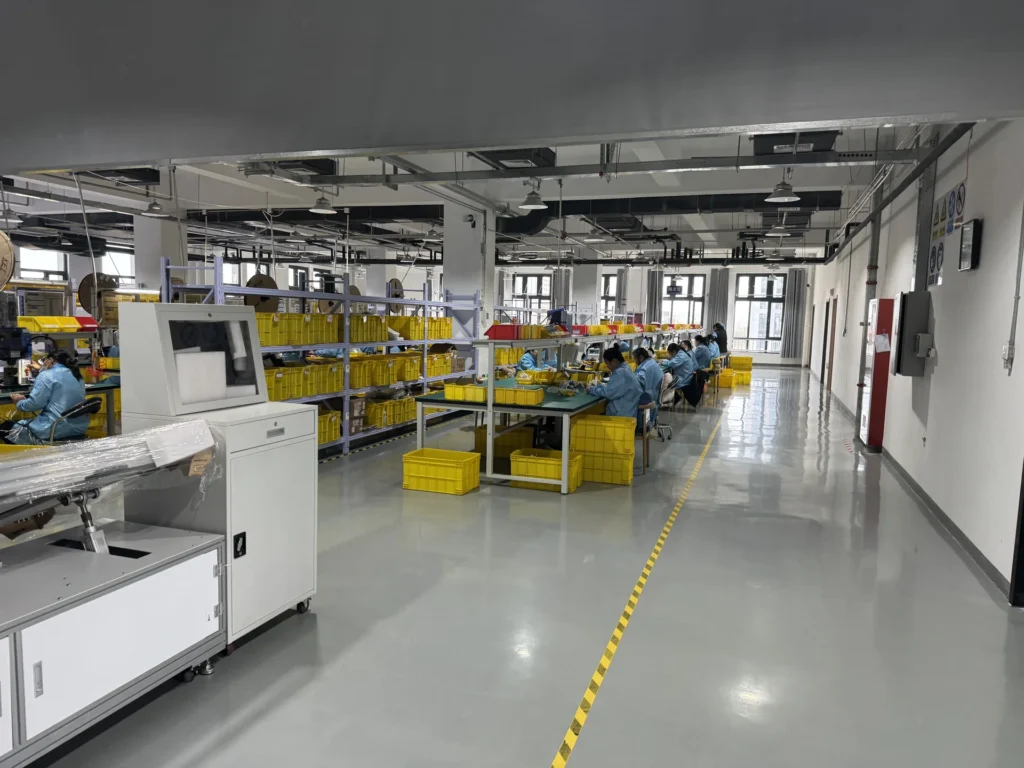
A sample demonstrates what a supplier built once. Process qualification examines how the supplier will reproduce it. Review cutting and stripping controls; approved crimp tooling, setup checks, and measurements; terminal seating and seal placement; splice or solder procedures; shield termination; overmold controls; and electrical test programs and fixtures.
For overmolded cable assemblies, external appearance cannot establish internal termination quality or sealing performance. Include appropriate checks before molding and agreed validation afterward. Ask how the supplier manages setup changes, maintenance, rework, nonconforming material, and revisions to test programs. Confirm that fixtures can detect relevant faults.
5. Agree on a Sample Validation Plan Before Production
Define sample quantities, production materials and processes, required tests, acceptance criteria, reviewers, destructive tests, traceability, and failure response before the supplier builds samples. There is no universal sample quantity: choose it according to application risk, process variation, and customer requirements. One passing assembly offers limited evidence of repeatability. Document any differences between hand-built prototypes and the intended production process.
Dimensional and installation checks
Verify overall length, branches, breakout dimensions, connector orientation, labels, and strain relief. Install samples in actual equipment or a representative fixture where practical. A harness can meet drawing dimensions while creating installation tension or preventing full connector engagement.
Electrical checks
Select tests according to the circuit and application: continuity, short detection, resistance, insulation resistance, dielectric withstand, or functional testing as appropriate. Agree on limits and conditions first. Dielectric withstand testing needs an approved method that accounts for connected electronics. RF and high-speed data assemblies may need signal-performance validation; continuity alone cannot establish that performance.
Mechanical and environmental checks
Depending on the application, evaluate terminal retention, crimp tensile performance, strain relief, flexing, vibration, temperature, fluids, or sealing. Define the setup, exposure, and pass criteria. Close deviations and obtain engineering and quality approval for the tested configuration.
6. Separate First-Article Approval from Production Release
First-article approval confirms that the inspected build meets defined requirements. It does not by itself demonstrate repeatable output at the required rate. Where risk warrants it, follow with a pilot lot using intended production equipment, operators, materials, and inspection controls. Review yield, rework, defects, variation, lot traceability, packaging, output, and corrective actions.
For automotive or other customer-controlled programs, determine whether PPAP or another formal approval package is required. Record the final approval scope: part numbers, revisions, manufacturing location, materials, tooling where applicable, and restrictions.
7. Control Changes After Qualification
Agree on which changes require notification, approval, or requalification: connector or wire substitutions, manufacturing transfers, tooling or process changes, revised test programs, and changes to shielding or overmolding. Match validation to risk. Early production shipments may warrant additional incoming checks focused on risks found during qualification.
8. Compare the Total Cost of Qualification
Compare quotations on a consistent basis, including materials, inspection, testing, packaging, freight assumptions, and documentation. Then account for tooling, fixtures, engineering review, sample builds, destructive tests, pilot lots, safety stock, and the ongoing cost of maintaining two active sources. An approved supplier with no recent production history may need renewed checks before an urgent transfer.
Frequently Asked Questions
Can an OEM qualify a second source using only an existing sample?
A sample can support initial feasibility review. Final qualification should use an approved baseline covering the BOM, pinout, dimensions, materials, and tests. Confirm that the OEM has the right to share drawings and reproduce any proprietary tooling.
Must the second source use exactly the same materials?
That depends on the design and customer requirements. Alternatives need documented review, authorization, and appropriate validation before use.
Does continuity testing prove equivalence?
No. It checks connections under specified conditions. It does not independently establish crimp durability, sealing, shielding, high-speed performance, or environmental resistance.
How long does qualification take?
Timing depends on document completeness, component availability, tooling, test duration, customer approvals, and corrective actions. Separate sample manufacturing time from the full qualification schedule.
Discuss Your Second-Source Requirements with OUKETECH
OUKETECH provides custom wire harness and cable assembly manufacturing for OEM projects. To begin a review, prepare current drawings, BOM, pinout, application conditions, forecast quantities, and required qualification records. Include known field issues and proposed alternatives so they can be considered during technical review. Contact OUKETECH to discuss your cable assembly requirements and define the sample, documentation, and validation scope for your project.