

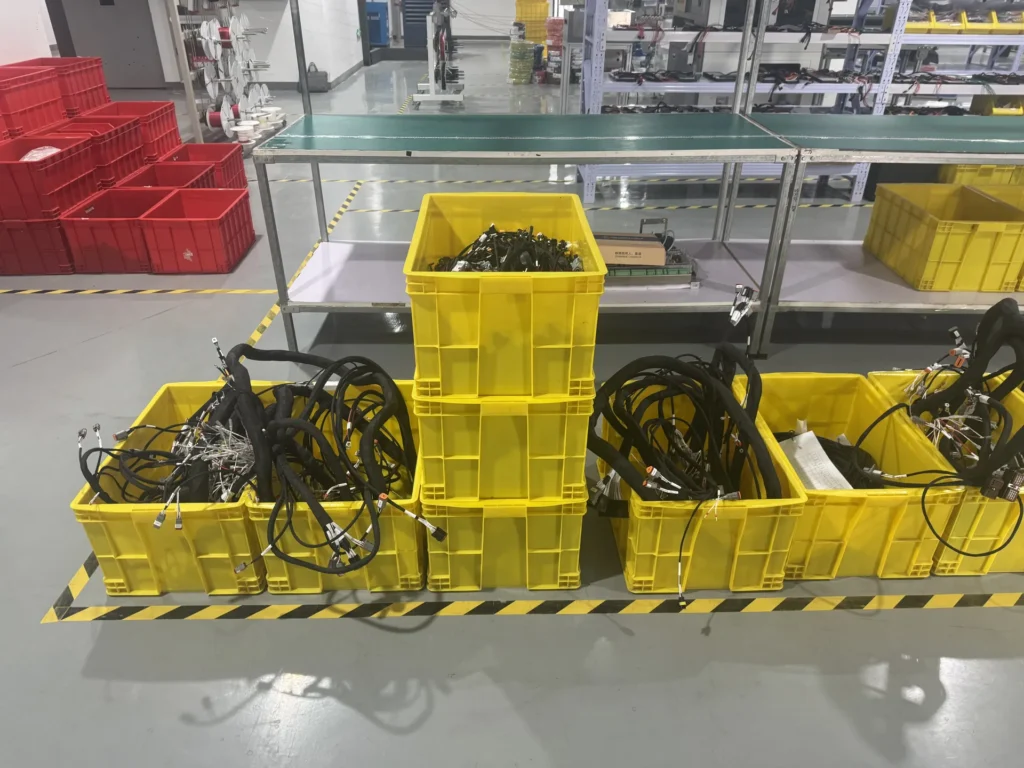
Custom cable assembly cost drivers include the cable and connector bill of materials, termination work, shielding and overmolding, test coverage, dedicated tooling, and the way an OEM places and releases orders. The quoted unit price reflects how these requirements interact. Two assemblies of similar length can have very different costs when one needs controlled shield termination, custom molded features, or application-specific electrical verification.
For procurement teams, the useful question is: Which requirements create recurring cost, which create one-time charges, and which change with production lot size? Separating those categories makes quotations easier to compare and exposes savings that do not weaken the approved design.
This guide focuses on connectorized cable assemblies, including shielded, overmolded, and signal-carrying designs. Its emphasis is cable construction and end-processing rather than the branch routing, breakout protection, and board layout associated with complex wire harnesses.
How custom cable assembly cost drivers fit into the quotation
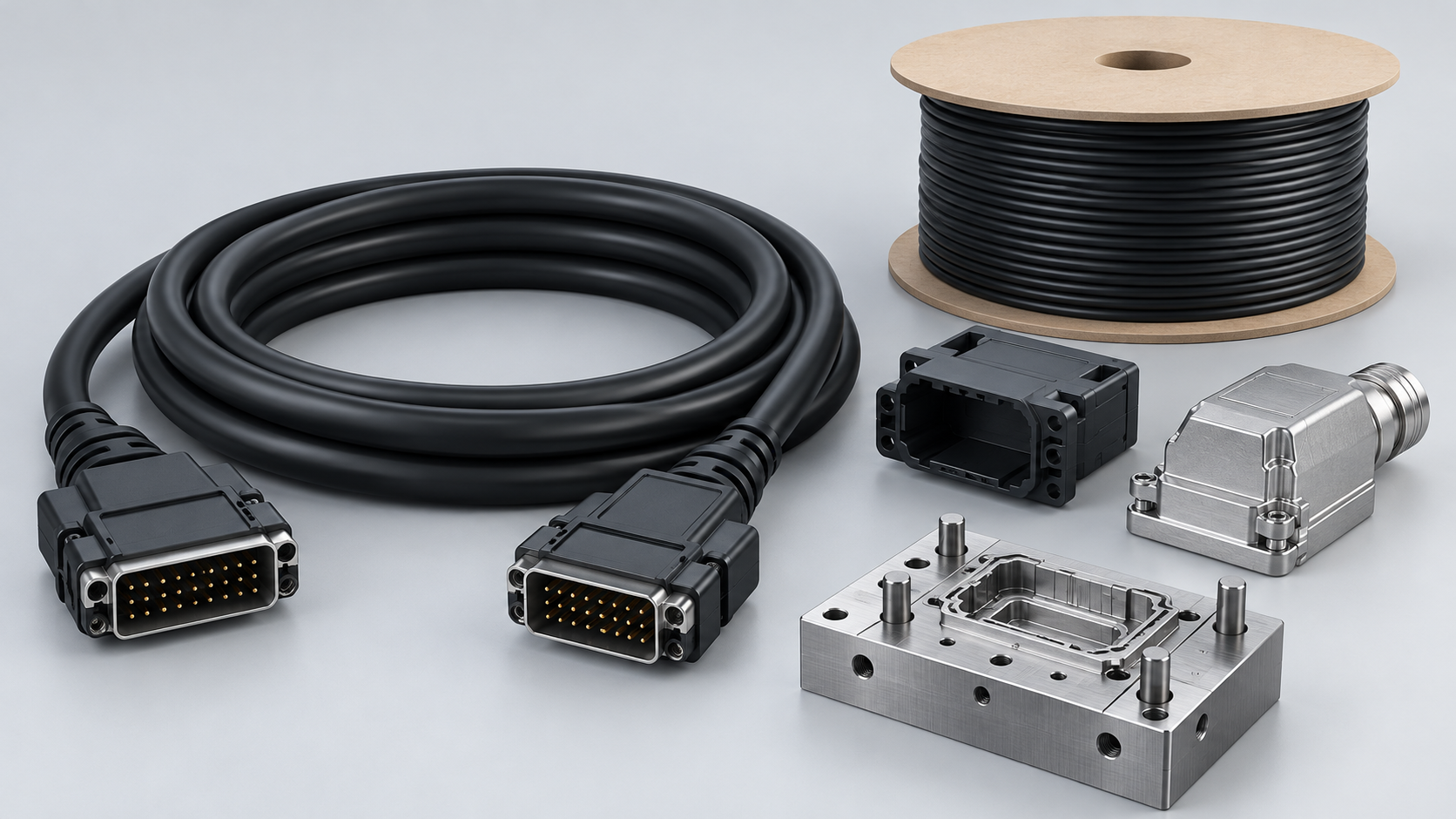
A useful quotation separates recurring manufacturing charges from development, tooling, and commercial costs. Cable, connectors, processing, inspection, and packaging contribute to the recurring price. Engineering work, dedicated molds, and initial test development may appear separately. Order quantity affects how setup and purchasing costs are spread, while delivery terms determine which logistics and inventory responsibilities the buyer actually receives.
Use this structure when reviewing a supplier’s proposal:
Order cost = accepted quantity × recurring unit price + separately charged setup + approved one-time charges + applicable logistics and taxes.
The recurring price can already include setup or amortized tooling. Ask how the supplier handles these items before adding them again. This is a comparison framework, not a universal factory costing formula.
| Cost category | What may be included | What the OEM should clarify |
|---|---|---|
| Materials | Cable, contacts, housings, seals, backshells, molding compound | Exact part numbers, approved alternatives, purchasing quantities |
| Processing | Cable preparation, termination, shielding, molding, labeling | Process sequence, tolerances, manual operations |
| Verification | Electrical tests, visual checks, records, qualification samples | Test limits, coverage, frequency, deliverables |
| Tooling and engineering | Applicators, molds, fixtures, programming, first articles | Ownership, maintenance, revision charges, amortization |
| Order structure | Lot setup, scheduled releases, stock holding, packaging | Actual lot size, commitment, cancellation liability |
A supplier may price these categories differently without changing the technical scope. Normalize the scope before deciding whether a quotation is expensive.
Materials: cable construction and connector selection
Material cost depends on the complete cable construction and connector system, not simply cable length or conductor size. Insulation, jacket, shielding, flexibility, connector accessories, and purchasing constraints can all influence the bill of materials. A change that reduces purchase cost may also change processing effort, electrical performance, or approval work, so material substitutions need engineering review.
Specify the cable construction before comparing prices
A cable specification should identify conductor size and count, conductor construction where relevant, insulation and jacket materials, shielding, and the electrical or mechanical requirements that affect selection. Temperature exposure, repeated movement, chemicals, and installation space can narrow the acceptable material options.
Do not treat two cables with the same conductor count and nominal outside diameter as interchangeable. Their internal construction may differ. For signal applications, impedance and attenuation requirements can matter; for moving equipment, the required motion profile may constrain the cable construction.
The purchasing consequence is project-specific: a stocked cable may support smaller releases, while a special construction may require a dedicated production run. Ask whether the cable supplier’s minimum purchase creates unused inventory and who owns it after an engineering change.
Cost the complete connector system
A connector quotation should include all required parts: contacts, housing, backshell, strain relief, seals, locking features, and other specified accessories. A low housing price does not establish the cost of a terminated and inspected cable end.
Specify manufacturer and part number where the interface requires them. If alternatives are acceptable, document the approval process and verify mating compatibility, installation space, electrical ratings, and processing requirements. Similar appearance is insufficient evidence of interchangeability.
Where approved alternatives remain unavailable, the quotation should state that assumption. A supplier should not silently replace a specified contact or cable merely to reach a target price.
For an overview of configurations that an OEM can specify, see OUKETECH’s custom cable assembly services.
Processing: why the cable ends can matter more than length
Assembly labor depends on the number and difficulty of manufacturing operations. Cutting a cable to length may be straightforward, while preparing shield layers, terminating small contacts, assembling backshells, and checking orientation can require several controlled steps. Cost therefore follows the processing sequence and its repeatability, rather than cable length alone. Access for tools and inspection also affects the route.
Cable preparation and termination
An end-preparation sequence can include jacket stripping, shield preparation, conductor separation, insulation stripping, contact termination, housing insertion, and strain-relief assembly. Each step needs sufficient access and a defined acceptance condition.
Tight strip dimensions, small conductors, delicate insulation, or restricted connector access may increase handling and setup effort. Ask which drawing tolerances serve an interface or performance requirement and which can be relaxed without affecting function. A blanket demand for tighter tolerances can add cost without improving the finished equipment.
For crimped contacts, tooling must match the terminal and wire application. TE Connectivity’s introduction to tooling solutions explains why matching terminals and tooling matters. Procurement should therefore confirm the termination method and required tools before assuming a cheaper tool gives an equivalent result.
Soldering introduces different process controls, including heat exposure and inspection access. It should be selected because it suits the connector and application, rather than treated as an automatic cost reduction from crimping.
Shield termination and backshell assembly
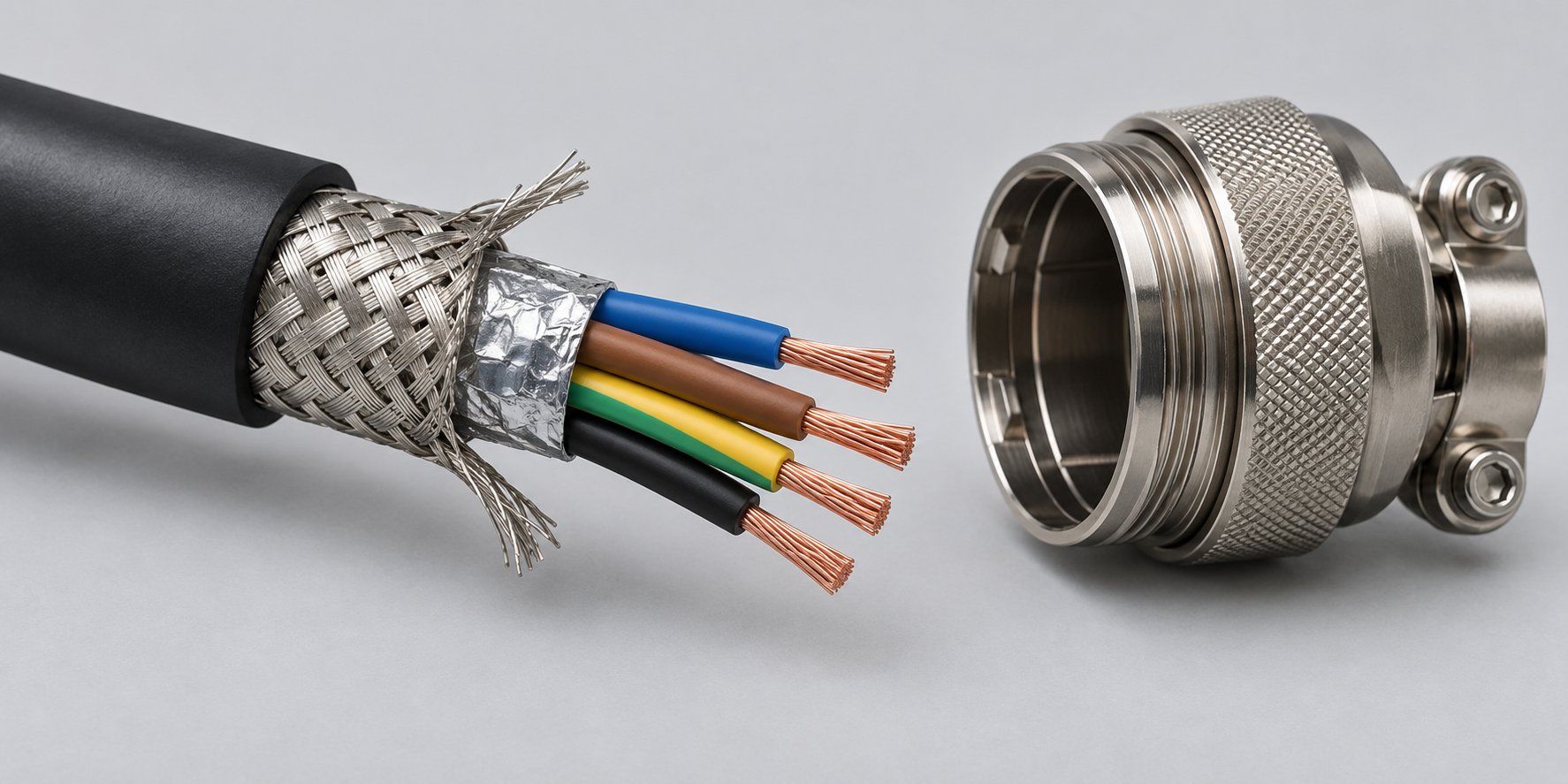
Buying shielded cable is only part of the shielding cost. The drawing also needs to define how the shield connects at each end, which accessories are required, and how that connection will be inspected or verified.
A drain-wire connection and a circumferential shield connection involve different construction choices. Their suitability depends on the system’s electromagnetic compatibility requirements and interface design. Do not substitute one for the other based solely on assembly time.
Shield preparation can also create opportunities for trapped strands or insulation damage. The supplier’s process must keep the assembly inspectable before the backshell or molded feature conceals it.
Overmolding adds both recurring and development costs
An overmolded cable end can combine handling protection and a defined external shape. Its cost may include mold development, material selection, loading, molding cycles, trimming, inspection, and process validation. It does not automatically establish a waterproof rating.
Specify the geometry that matters to installation, the expected environment, and any sealing or mechanical verification. Ask whether an existing suitable tool can be used or a dedicated mold is necessary. Changes to the connector, cable diameter, or exit geometry may require tooling review after release.
Testing: define coverage before comparing the price
Testing cost depends on the defects or performance characteristics being checked, the time required, and the records the OEM needs. Continuity, insulation resistance, dielectric withstand, and signal-performance measurements answer different questions. A quotation that says only “electrical testing included” leaves too much room for different assumptions. Define the approved method, limits, frequency, and reporting scope.
| Verification activity | Question it addresses | Pricing inputs to specify |
|---|---|---|
| Continuity and connection mapping | Are intended paths connected, with unintended connections checked as specified? | Netlist, resistance limits, fixture, per-unit records |
| Insulation resistance | Is insulation resistance acceptable under the defined conditions? | Voltage, dwell, limits, test points |
| Dielectric withstand | Does insulation withstand the specified electrical stress? | Voltage type, ramp, dwell, leakage limits, exclusions |
| Signal-performance measurement | Does the assembly meet defined transmission requirements? | Frequency range, parameters, adapters, acceptance limits |
| Mechanical or environmental qualification | Does the design meet the agreed mechanical or exposure requirement? | Method, sample count, conditioning, reporting |
Cirris distinguishes connection testing from insulation-related high-voltage testing in its cable testing glossary. Passing a connection check does not establish every aspect of insulation or signal performance.
Assemblies containing electronic components need special attention. Test voltages and connections must suit the components and approved procedure. Cirris discusses these concerns in its guidelines for testing components. Do not apply a generic high-voltage test requirement to every design.
Separate design qualification from routine production acceptance. A flex test or environmental qualification may use designated samples, while the production plan may require electrical checks on every unit. Requiring all qualification activities on every shipped assembly could be impractical or destructive.
Reporting requirements matter too. A batch pass statement, individual measurement record, and serialized traceability package create different data-handling work. Specify the information your receiving and quality teams actually need.
Tooling and NRE: separate ownership from unit pricing
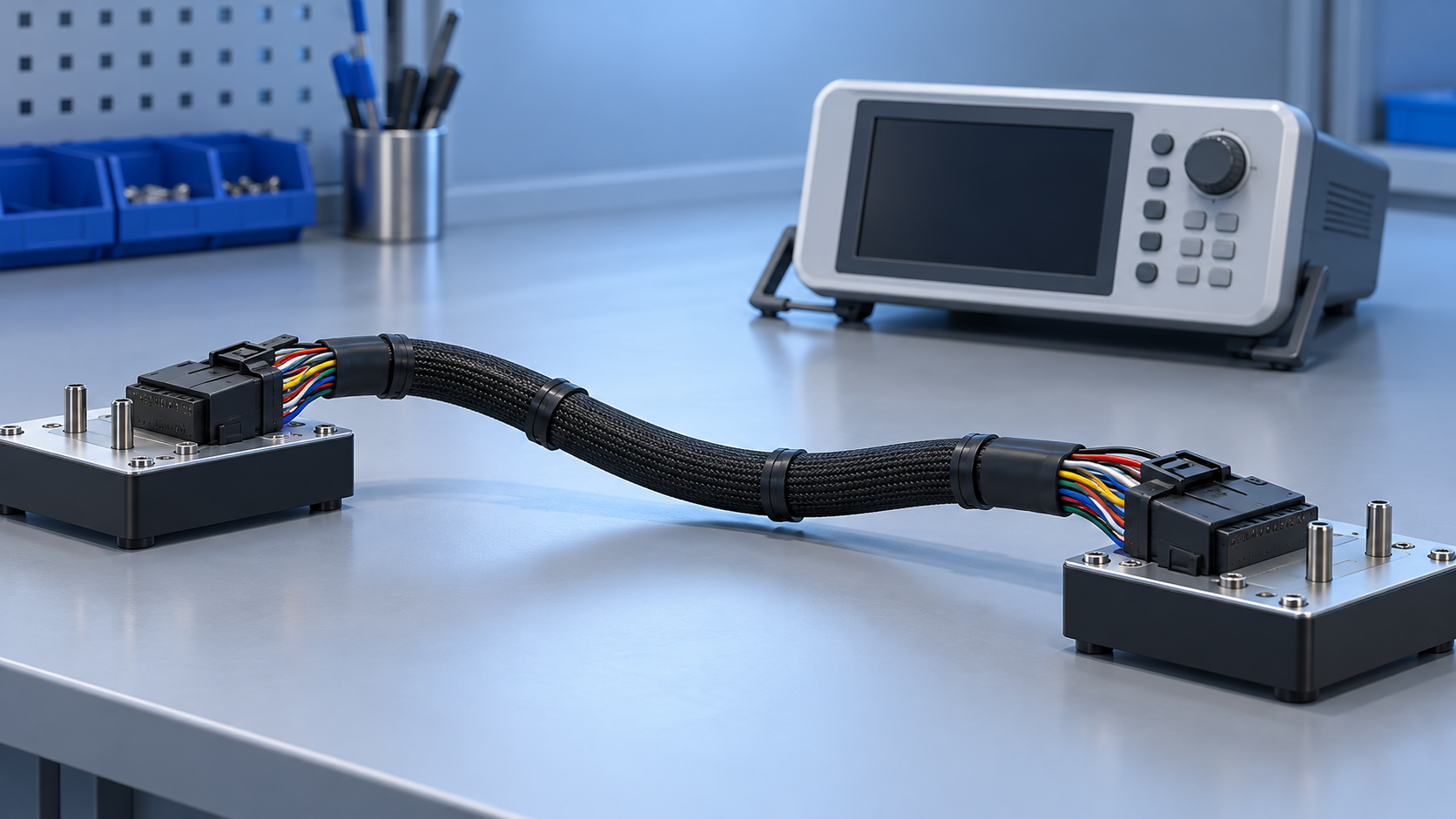
Dedicated tooling and non-recurring engineering (NRE) can support repeatable production, but their commercial treatment needs explicit agreement. A mold, termination applicator, test fixture, and engineering review are different deliverables. Clarify which charges buy a physical asset, which pay for development work, and which are recovered through the unit price. Ownership alone does not define transferability or future usability.
Ask the supplier to describe the scope of each one-time charge. A test fixture may be usable only with a particular tester, adapter system, or program. A mold may require a compatible machine and an established process. Transferring the asset can therefore require additional engineering work.
TE Connectivity’s crimp tooling white paper connects tooling characteristics with process variation and production performance. The procurement implication is to evaluate tooling across its intended production use, including maintenance and replacement responsibility.
For tooling amortized into the unit price, establish the recovery quantity, treatment of excess orders, and liability if the program stops early. For tooling purchased separately, establish identification, storage, maintenance, change approval, and return conditions.
Drawing revisions can create fresh costs even when the assembly looks similar. A changed cable diameter may affect molding; a new connector may affect both termination tooling and test adapters. Review these dependencies before approving an engineering change order.
OEM cable assembly pricing factors in the order structure
Annual demand, production lot size, release quantity, and delivery frequency are separate pricing inputs. A forecast may help planning, but it does not necessarily authorize material purchases or guarantee a production run. Suppliers can price committed volume differently from uncertain demand because setup, purchasing, inventory, and cancellation exposure differ. Compare quotations using the same commitment and release assumptions.
Annual volume is not the production batch
Consider an illustrative program needing 6,000 assemblies annually. One arrangement uses twelve production lots of 500. Another uses four lots of 1,500 with monthly deliveries from stock. Both meet the same annual demand, but their setup and stock-holding requirements differ.
Neither arrangement is automatically cheaper overall. Larger lots may spread setup effort, while stored assemblies tie up cash and increase exposure to design changes. Identify who owns finished stock, how long it can be held, and what happens when demand changes.
A blanket order should distinguish a planning forecast from binding releases and authorized material commitments. Otherwise, buyer and supplier may price different risks without realizing it.
Product variants can divide the apparent volume
An annual program may contain several lengths, connector options, or pinouts. Shared cable and connectors can support purchasing consolidation, but each variant may need separate setup, identification, fixtures, or test programs.
Provide quantity by part number and drawing revision. Then ask which operations or materials can genuinely be shared. Aggregating every variant into one volume figure can overstate the savings available from scale.
Packaging and delivery terms affect the comparison
Individual bags, protective caps, coiling requirements, labels, and shipment sequencing can add recurring work. Specify packaging that protects the product and fits receiving or line-side handling. Unnecessary packaging can add cost; inadequate packaging can create damage or installation problems.
Compare freight, duties, insurance, and delivery responsibilities separately where they are excluded from the manufacturing price. Check quotation validity and the treatment of material changes before using a prototype quote as a long-term production benchmark.
How OEM teams can reduce cost without weakening the specification
Effective cost reduction starts when engineering and procurement examine the same approved requirements. Start with unnecessary variation, unclear specifications, avoidable setup, and difficult handling. Then evaluate material or process alternatives against the application. A proposed saving should identify what changes, what needs revalidation, and whether recurring savings justify qualification expense or new inventory exposure.
| Proposed action | Potential benefit | Condition to check |
|---|---|---|
| Consolidate connector families | Fewer purchased items and tooling combinations | Interface, ratings, space, approval compatibility |
| Standardize lengths where feasible | Fewer variants and simpler planning | Routing, bend allowance, installation tolerance |
| Review shield termination details | More repeatable preparation and assembly | EMC requirements and approved grounding design |
| Relax nonfunctional tolerances | Reduced handling and measurement burden | No effect on fit, function, or test acceptance |
| Commit stable releases | More predictable purchasing and production | Inventory ownership and revision liability |
| Clarify test reporting | Avoid unnecessary record handling | Retain required evidence and traceability |
Request alternatives as separate proposals against the baseline drawing. This keeps a lower-price design change visible and prevents a quotation from drifting away from the required product.
Before releasing an RFQ, prepare the drawing revision, bill of materials, cable specification, connector and contact part numbers, pinout, shield connection details, critical dimensions, test plan, packaging instructions, and quantities by variant. Identify sample requirements and the proposed production schedule separately.
Before requesting a quotation, review the prepare cable assembly drawings for quotation.
Use a quotation comparison sheet that records exclusions as well as prices. Confirm whether first articles, qualification samples, destructive testing, fixture development, and shipment are included. A missing line item is a question to resolve, rather than evidence that its cost is zero.
FAQ
What usually drives custom cable assembly cost most?
There is no universal ranking. Connectors and cable can dominate some designs; shield preparation, molding, testing, or small-lot setup can dominate others. Request a breakdown that separates materials, recurring work, and one-time charges for the actual drawing.
Why does a short cable assembly sometimes cost more than a longer one?
Shorter length saves cable material, but both ends still need processing. Specialized connectors, shield termination, close tolerances, or testing can outweigh the material saved. A short assembly can also provide less space for handling and installation.
Does higher annual volume always lower the unit price?
No. Savings depend on committed quantities, production lots, purchasing opportunities, and variant mix. Frequent small releases or uncertain forecasts may limit the benefit. Larger lots also introduce inventory costs that should be included in the decision.
Should tooling be included in the unit price?
Either separate charging or amortization can work. The agreement should state the recovery basis, ownership, maintenance, revision costs, and early termination treatment. Compare total committed program cost rather than the displayed unit price alone.
Can continuity testing replace signal-performance testing?
No. Connection verification and transmission performance address different requirements. Where signal performance matters, define the relevant parameters, frequency range, fixtures, and limits. Use the application requirements to choose the test plan.
What information makes an OEM quotation more reliable?
A controlled drawing, complete material list, pinout, approved test requirements, quantity by variant, and release schedule reduce ambiguity. Include packaging and logistics expectations so suppliers quote the same deliverable.
Discuss your cable assembly requirements with OUKETECH
OUKETECH works with customer drawings, specifications, and test requirements for OEM cable projects. Its build-to-print OEM cable manufacturing page provides further context for preparing a manufacturing inquiry.
For a project-specific quotation, send OUKETECH your drawing, BOM, pinout, test plan, and order schedule. Ask for recurring unit pricing, tooling and NRE, sample requirements, and delivery assumptions to be stated separately. This gives your engineering and procurement teams a concrete basis for reviewing cost, scope, and production readiness.